Oxidation meets bioremediation / For difficult industrial wastewater
RedOXY®-4C combines ferrate-based oxidation, contaminant transformation, adsorption and sustained oxygen support in one integrated treatment process.
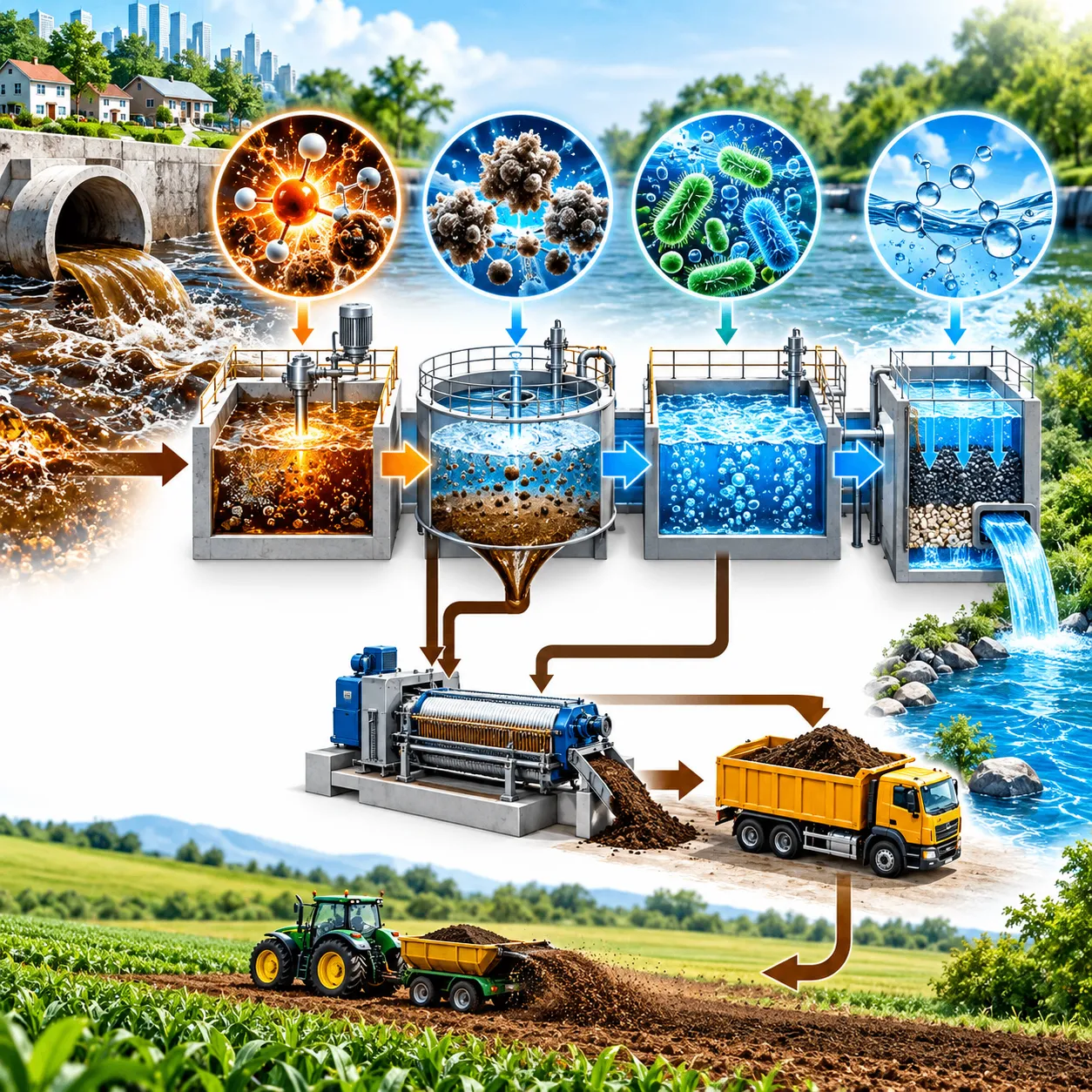
Developed for refinery, petrochemical and high-strength industrial wastewater, RedOXY®-4C is designed as a four-component treatment platform. REDXXX initiates ferrate-based oxidation and develops iron-based adsorption sites. OXY-One, OXY-Two and OXY-Three support subsequent contaminant transformation, hydroxylation and long-term aerobic biological treatment. The complete process requires controlled mixing, reaction tanks, solids separation, biological monitoring and verification of treated-water and sludge quality.
Oxidize / Transform / Biodegrade / Separate
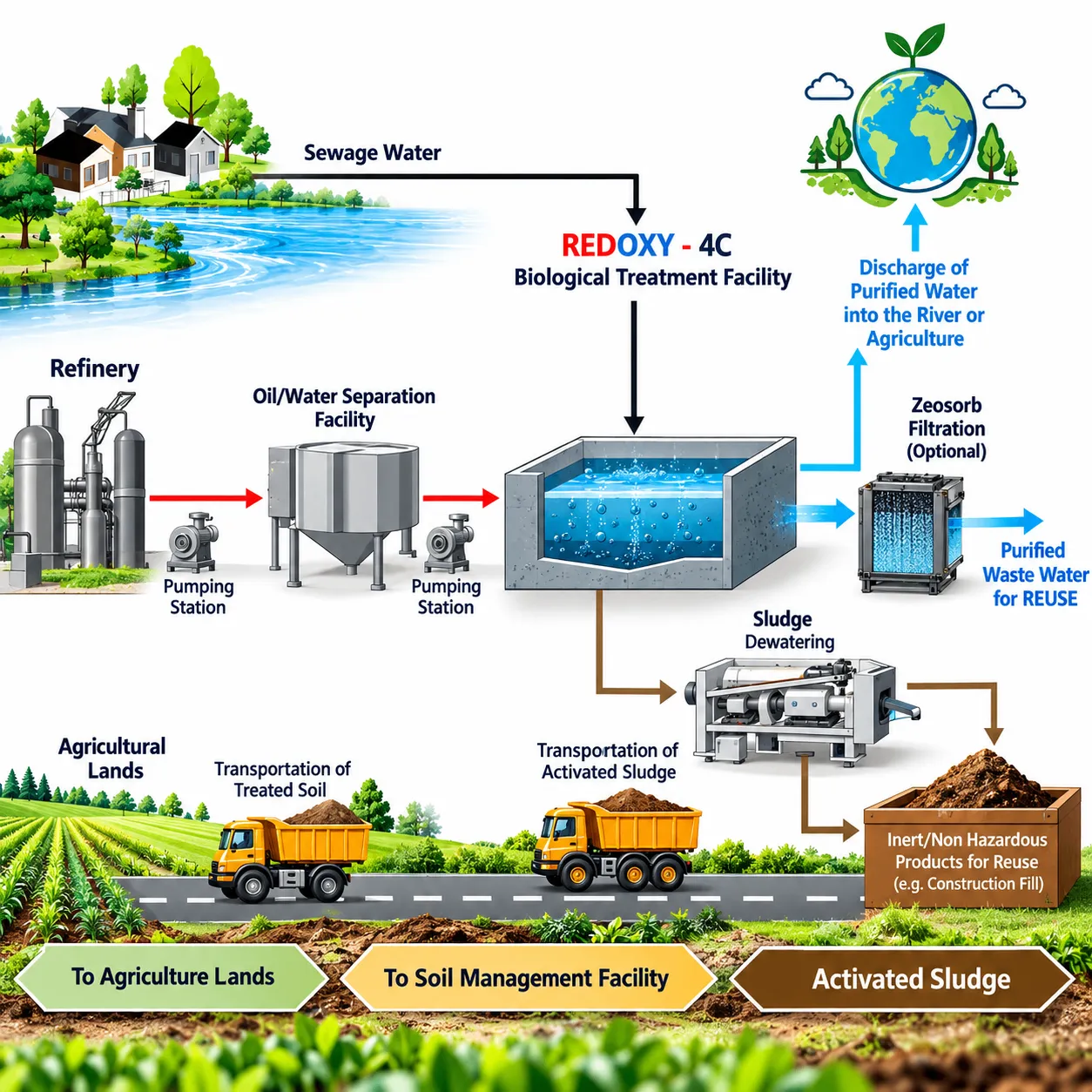
Four-stage treatment.
For high-strength wastewater.
Designed for professionally engineered treatment plants handling organic loading, petroleum contamination, odour, nutrients and other complex industrial pollutants.
Refinery Wastewater
Treatment support for free oil, sulfides, phenols, mercaptans, high COD and high BOD.
Petrochemical Effluent
Oxidation and biological treatment of hydrocarbon- and chemical-affected wastewater.
Oil, Fats and Grease
Transformation and biodegradation support for FOG and petroleum-related compounds.
Industrial Sludge Treatment
Stabilization, dewatering and biodegradation of suitable sludge following chemical analysis.
Micropollutant Treatment
Evaluation for pharmaceuticals, hormones, BPA, nonylphenol and other difficult organic compounds.
Water Reuse Systems
Multi-stage treatment before compliant agricultural, industrial or other approved reuse applications.
Four treatment functions / Working as one process
Ferrate Oxidation and Adsorption (REDXXX)
REDXXX is described as an iron-based ferrate component that provides strong oxidation and produces iron-based particles capable of supporting coagulation and adsorption.
Intermediate Capture and Separation (OXY-ONE)
OXY-One is positioned as a treatment stage for removing or capturing water-soluble oxidation products. Its exact chemistry and separation mechanism must be documented.
Hydroxylation and Contaminant Transformation (OXY-TWO)
OXY-Two is associated with oxidation and hydroxylation processes that transform hydrophobic organic compounds into more water-compatible intermediates.
Sustained Oxygen for Bioremediation (OXY-THREE)
OXY-Three is described as a settling granular oxygen-release stage that supports aerobic microorganisms and continued biodegradation in wastewater and sludge.
Science behind RedOXY®-4C
RedOXY®-4C combines chemical pretreatment with biological remediation. Each stage has a different function and requires its own monitoring and control.
- Ferrate-Based Oxidation – Ferrate(VI), represented as $FeO_4^{2-}$, can oxidize susceptible organic and inorganic compounds and subsequently form iron-hydroxide solids.
- Hydroxylation of Organics – Oxidation can introduce oxygen-containing functional groups into organic molecules, potentially making some compounds more accessible to subsequent biological treatment.
- Adsorption and Coagulation – Generated iron solids and added adsorber components can capture selected dissolved pollutants and suspended material for physical separation.
- Aerobic Biological Restoration – Sustained oxygen release is intended to support aerobic microorganisms that biodegrade remaining organic carbon in the wastewater and sludge.
Technical Data & Formulation Information
Published proportions, component functions, and safety guidelines for RedOXY®-4C.
Published Formulation Information
| Component | Published Proportion | Intended Function |
|---|---|---|
| REDXXX | 20% | Ferrate oxidation, coagulation and adsorption |
| OXY-3C combined fraction | 80% | Oxidation, transformation and oxygen-support functions |
| OXY-One | Not separately published | Intermediate capture or separation |
| OXY-Two | Not separately published | Hydroxylation and organic transformation |
| OXY-Three | Not separately published | Sustained oxygen support and bioremediation |
Operational Parameters
- Product form: Granular treatment formulation (REDXXX in granular beads).
- Example total dosage: 50 g/m³ (10 g/m³ REDXXX + 40 g/m³ OXY-3C).
- Oxygen-release duration: Up to 12 months (OXY-Three).
- Treatment configuration: Three reaction/treatment tanks plus solids handling.
Safety & Handling Highlights
- Restrict handling to trained personnel using chemical-resistant gloves, goggles and face protection.
- Use respiratory protection where granular dust may form; keep formulation sealed and dry.
- Do not manually spread the product without an approved exposure assessment.
- Monitor exothermic reactions, pH and residual oxidant during trials; characterize sludge before disposal.
Download our latest documents
Explore our RedOXY-4C poster library


Frequently
Asked Questions
Essential information about the four-component process, biological treatment, dosage, solids handling and wastewater reuse.
Contact SupportBuild an integrated wastewater-treatment process
It all starts with wastewater characterization and pilot testing.
Send us your industrial effluent data (refinery, petrochemical, high COD/BOD, FOG), flow rates and reuse requirements. Our specialists will help evaluate RedOXY®-4C for your facility.
