Targeted contaminant removal powered by iron hydroxide
FERROLOX® is a granular, amorphous ferric hydroxide adsorption media engineered to remove arsenic, phosphate, selected heavy metals and dissolved hydrogen sulfide from water.
Manufactured through a controlled granulation and classification process, FERROLOX® combines high porosity with an approximately 290 m²/g specific surface area. Its iron-rich surface provides active adsorption and reaction sites for contaminants including arsenate, phosphate, copper, chromium, zinc, selenium and sulfide. The media can be integrated into drinking-water, groundwater, wastewater, reverse-osmosis and industrial treatment systems using either downflow or suitably engineered upflow vessels.
High surface area / Selective contaminant capture
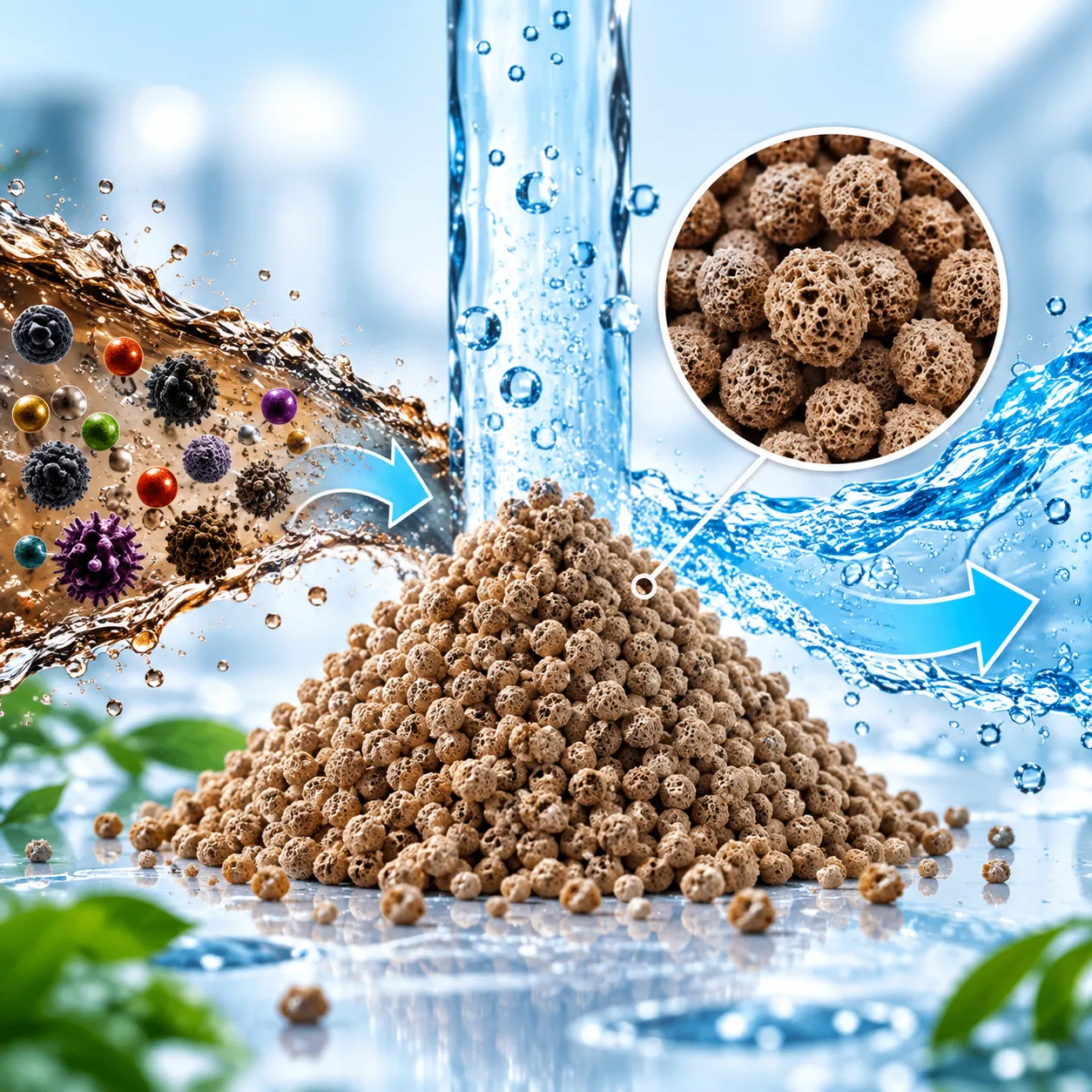
One iron-based media.
Multiple treatment challenges.
FERROLOX® can be installed as a primary adsorber, polishing stage or pretreatment barrier. Final system design should be based on water analysis, competing ions, target residual concentration and validated pilot or column testing.
Arsenic Removal from Groundwater
Efficient adsorption of arsenate for drinking water and groundwater remediation.
Phosphate Removal and Recovery
High-affinity control of phosphate in municipal, industrial and agricultural applications.
Heavy-Metal Reduction
Adsorption of targeted dissolved metals including copper, chromium, zinc and selenium.
Dissolved Hydrogen Sulfide Removal
Immobilization of dissolved sulfide to help reduce odor and corrosion risks.
Reverse-Osmosis Protection
Pretreatment to protect sensitive RO membranes from specific contaminants.
Municipal and Industrial Wastewater
Advanced polishing for stringent wastewater discharge or reuse requirements.
Four treatment functions engineered into one media
Selective arsenic adsorption (ARSENIC-CAPTURE™)
Iron-hydroxide surface sites bind arsenate species and convert them into strongly retained iron-arsenate complexes. When arsenite is present, validated pre-oxidation to arsenate is normally recommended for more effective removal.
High-affinity phosphate control (PHOS-BIND™)
Phosphate reacts with active ferric-hydroxide sites and is retained through adsorption and iron-phosphate formation, supporting phosphorus polishing in municipal, industrial and process-water applications.
Multi-metal adsorption (METAL-SORB™)
The porous iron-based surface supports the reduction of selected dissolved metals and metalloids, including copper, chromium, zinc and selenium. Performance depends on oxidation state, pH and competing water constituents.
Dissolved sulfide immobilization (SULFIDE-LOCK™)
Dissolved hydrogen sulfide reacts with ferric hydroxide to form retained iron-sulfide compounds, helping reduce sulfide concentration, odor and associated corrosion risks in water systems.
High-porosity ferric hydroxide technology
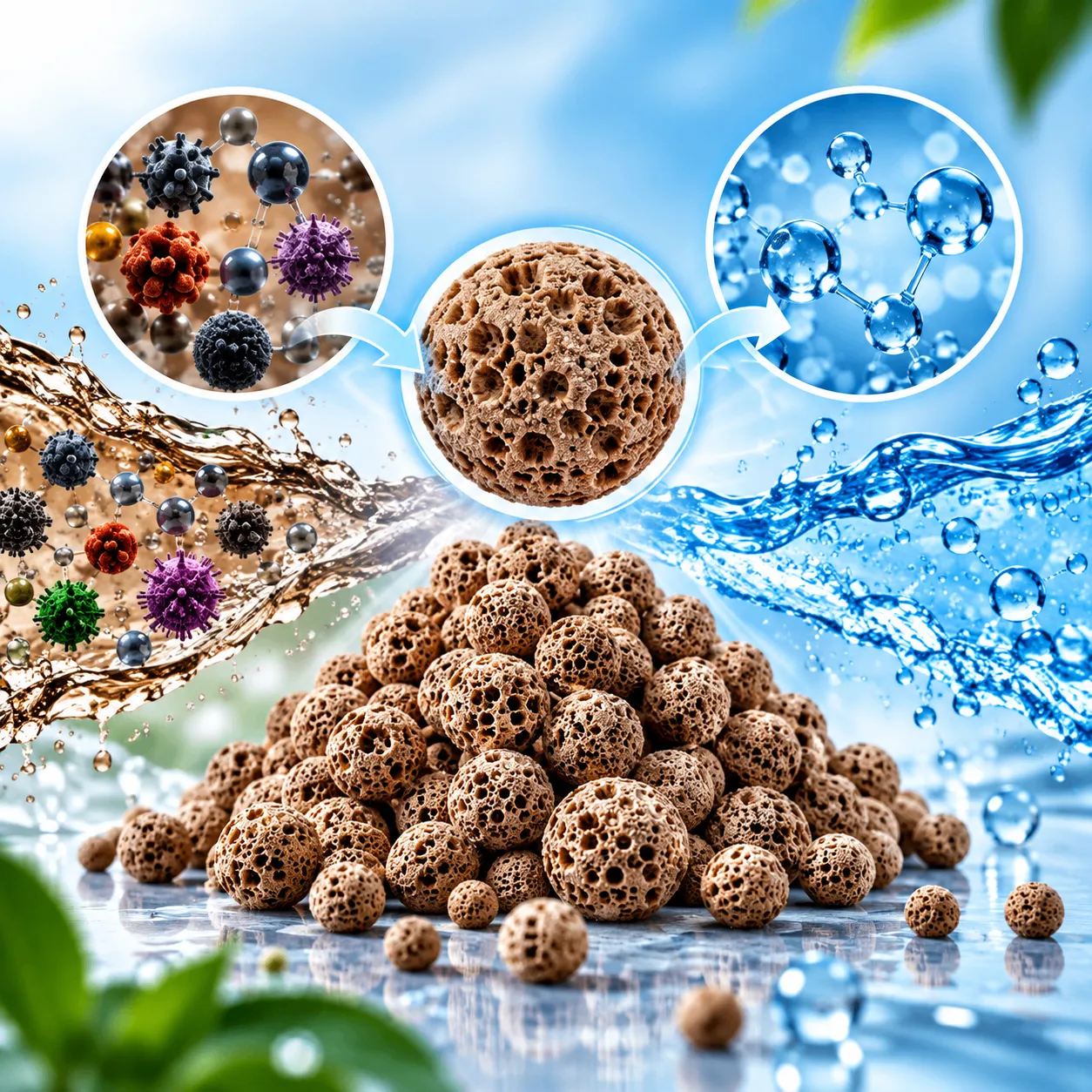
FERROLOX® combines a porous internal structure, high specific surface area and reactive ferric-hydroxide chemistry to capture contaminants from aqueous streams.
- Amorphous Ferric-Hydroxide Structure – The media contains a minimum stated ferric-hydroxide content of approximately 75%, with ferric ions representing up to approximately 40% by weight.
- Extensive Active Surface – A specific surface area of approximately 290 m²/g and minimum stated porosity of 75% provide broad access to internal adsorption sites.
- Adsorption and Surface Reaction – Target oxyanions first adsorb to iron-hydroxide sites and can subsequently form strongly retained iron compounds (e.g., FeAsO₄, FePO₄). These are idealized reactions; actual speciation depends on pH, oxidation state, and water chemistry.
- Flexible Vessel Integration – The media can operate in downflow or professionally designed upflow adsorbers. Hydraulic configuration, pretreatment, oxygen dosing, backwashing and vessel arrangement must be selected for the actual contaminant and feed-water conditions.
Technical Data
Key properties, operating parameters, and reference capacities for FERROLOX® media.
Physical & Operating Properties
| Property | Published Value |
|---|---|
| Chemical composition | Amorphous Fe(OH)₃ |
| Fe(OH)₃ content | Minimum 75% |
| Ferric-ion content | Up to approximately 40% by weight |
| Specific surface area | Approximately 290 m²/g |
| Porosity | Minimum 75% |
| Bulk density | 630–640 kg/m³ |
| Moisture content | Approximately 8% |
| Published particle grades | 0.5–2.0 mm and 2.0–4.0 mm |
| Recommended pH range | 5.0–9.5 |
| Service velocity | 10–20 m/h |
| Backwash velocity | 25–30 m/h |
| Bed depth | 420–1,500 mm |
| Upflow freeboard | 10–20% |
| Downflow freeboard | 30–40% |
Published Reference Capacities
These are reference values—not guaranteed design capacities. Actual loading can change substantially with pH, contaminant oxidation state, competing ions, and contact time.
- Arsenic (as As⁵⁺): Approximately 13 g/kg
- Phosphorus: Approximately 16 g/kg
- Zinc: Approximately 30–40 g/kg
- Hydrogen sulfide: Up to approximately 22% of dry media weight
Packaging Information
Standard bag: 30 litres (~19 kg) | Bag pallet: 40 bags (~785 kg gross)
Bulk bag: 1,000 litres (~634 kg) | Bulk-bag pallet: ~660 kg gross
Download FERROLOX® product documents
Explore FERROLOX®
treatment applications


Frequently
Asked Questions
Essential information about FERROLOX® selection, operation, performance and disposal.
Contact SupportBuild your FERROLOX® treatment solution
It starts with a complete water analysis.
Send us your water-quality data, target contaminants and flow requirements. Our specialists will help evaluate FERROLOX® for your application and recommend the necessary treatment configuration.