Target fluoride with titanium-powered adsorption
TITANICARBON® is a granular hybrid adsorber combining titanium oxide with activated carbon for reducing dissolved fluoride in water.
TITANICARBON® is designed to combine the fluoride affinity of titanium-based surface sites with the porous support structure of activated carbon. According to the brochure, the ingredients are blended, thermally conditioned and classified into granular particle grades. When contaminated water passes through the packed media bed, fluoride ions interact with hydroxylated titanium surface sites and are retained within the adsorber. Performance is strongly influenced by pH and competing water constituents.
Titanium-based selectivity / Carbon-supported performance
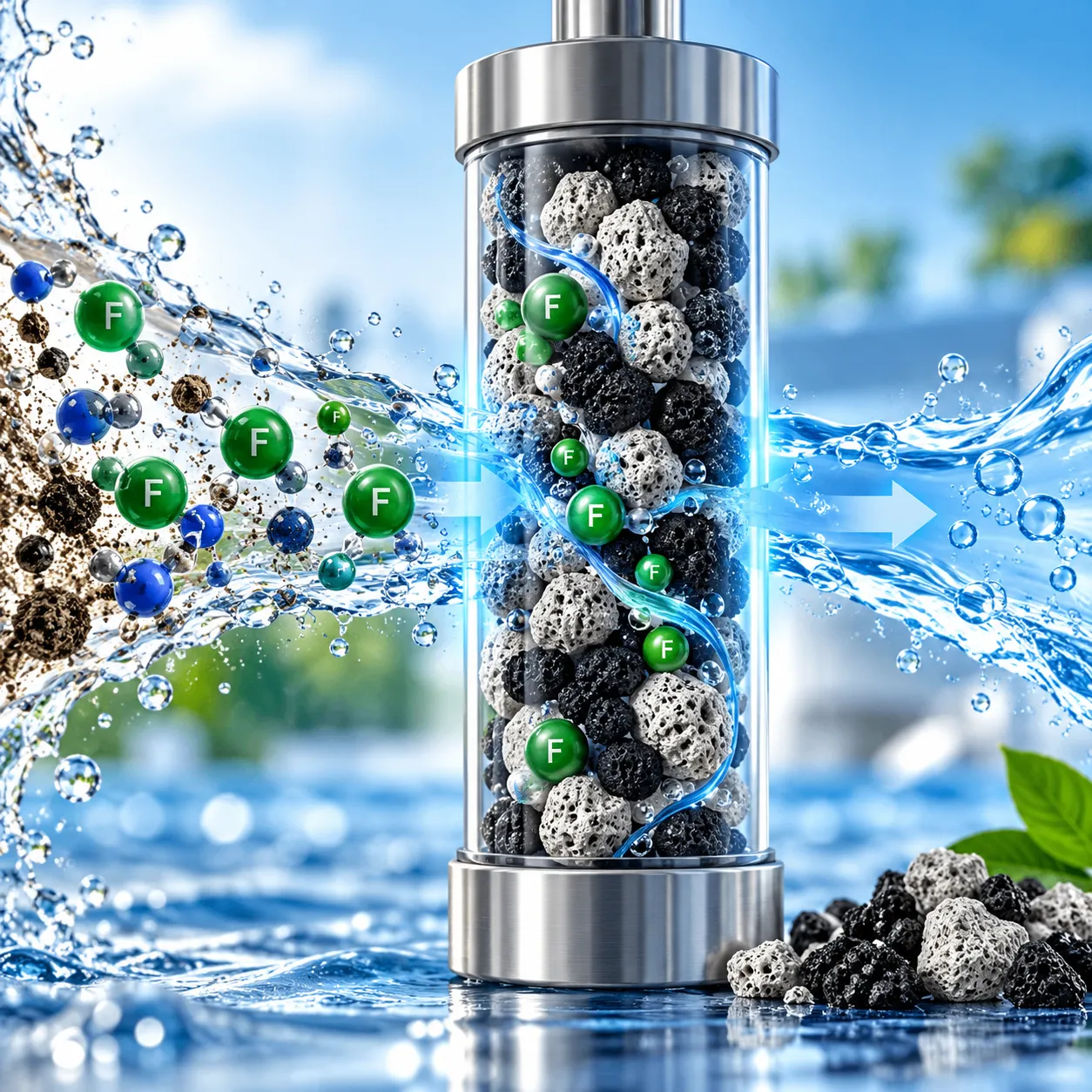
Targeted fluoride adsorption.
Multiple water sources.
TITANICARBON® can be considered for water sources containing excessive dissolved fluoride. Final media selection and system design require representative laboratory testing and complete water analysis.
Groundwater Defluoridation
Targeted removal of excess dissolved fluoride from well and groundwater sources.
Municipal Drinking Water
Fixed-bed defluoridation systems for public and community water supplies.
Community Water Systems
Reliable adsorption polishing for regional water treatment facilities.
Point-of-Entry Treatment
Whole-building pressure vessel configurations for residential property protection.
Industrial Process Water
Adsorption treatment for industrial manufacturing and utility water streams.
Final Fluoride Polishing
Downstream polishing barrier to achieve strict target residual limits.
Four treatment functions engineered into one media
Titanium-based fluoride affinity (FLUORIDE-CAPTURE™)
Hydroxylated titanium surface sites interact with dissolved fluoride ions, supporting their transfer from water to the solid adsorbent.
Porous activated-carbon structure (CARBON-SUPPORT™)
The activated-carbon phase provides a porous structural support and additional internal surface that facilitates water contact with the composite media.
pH-responsive adsorption (pH-SELECT™)
Surface charge and fluoride affinity change with pH. The brochure reports its strongest fluoride adsorption within a narrow near-neutral range.
Fixed-bed fluoride polishing (BED-POLISH™)
Granular TITANICARBON® can be installed in a packed adsorption vessel for continuous treatment and final fluoride polishing under validated hydraulic conditions.
Titanium oxide chemistry supported by porous carbon
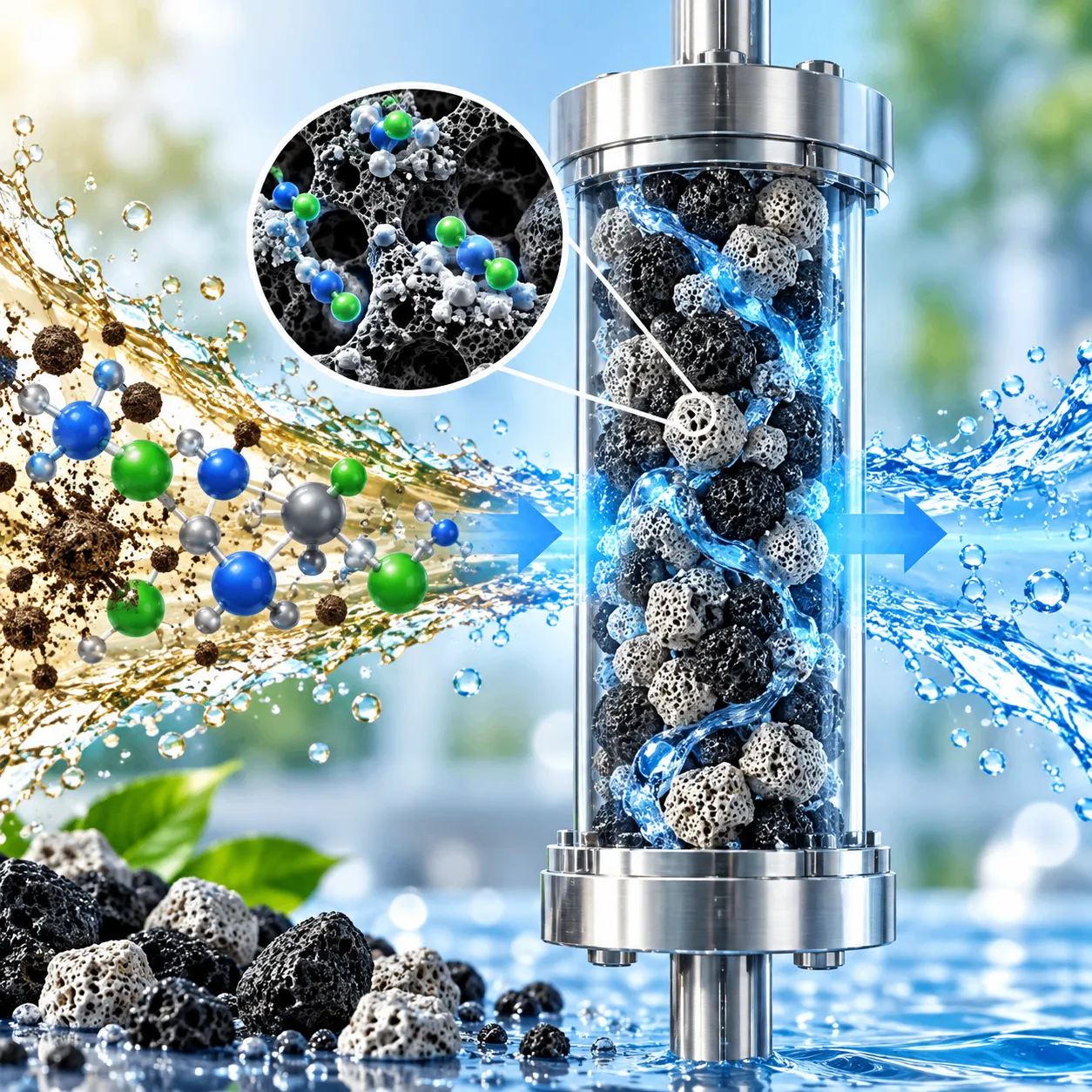
TITANICARBON® uses reactive titanium surface hydroxyl groups to bind fluoride while the carbon phase provides a granular, porous treatment structure.
- Titanium Surface Sites – In water, titanium oxide surfaces develop hydroxyl groups that can participate in fluoride adsorption.
- Ligand Interaction – Fluoride can replace surface-associated hydroxyl groups or water molecules, producing retained titanium-fluoride surface complexes.
- pH-Controlled Affinity – Water pH influences the charge of the titanium surface and the concentration of competing hydroxide ions. The brochure identifies pH 6.9–7.2 as its preferred range.
- Packed-Bed Contact – Water flows through the granular media bed, allowing fluoride to diffuse to accessible adsorption sites before treated water leaves the vessel.
Download TITANICARBON® product documents
Explore TITANICARBON®
fluoride-treatment technology


Frequently
Asked Questions
Essential information about TITANICARBON® selection, performance and operation.
Contact SupportBuild your TITANICARBON® fluoride solution
It starts with complete water chemistry.
Send us your fluoride concentration, pH, alkalinity, bicarbonate, phosphate, sulfate, silica and flow requirements. Our specialists will help evaluate TITANICARBON® for your application and recommend the necessary treatment configuration.