Degrade BPA contamination / Restore the internal pipe surface
BISOXY-LINER® is a two-part pipe-remediation concept combining advanced oxidation with an MgO-based catalytic surface-treatment stage.
The system is intended for hot- and cold-water installations containing BPA-based epoxy coatings or other confirmed sources of Bisphenol A contamination. BISOXY® generates reactive oxygen species designed to oxidize BPA and other oxidizable organic residues, while the MgO-based LINER stage supports alkaline surface treatment and passivation. The process is positioned as a potential rehabilitation option where technically suitable pipes may otherwise require coating removal or replacement.
Oxidation / Degradation / Surface passivation
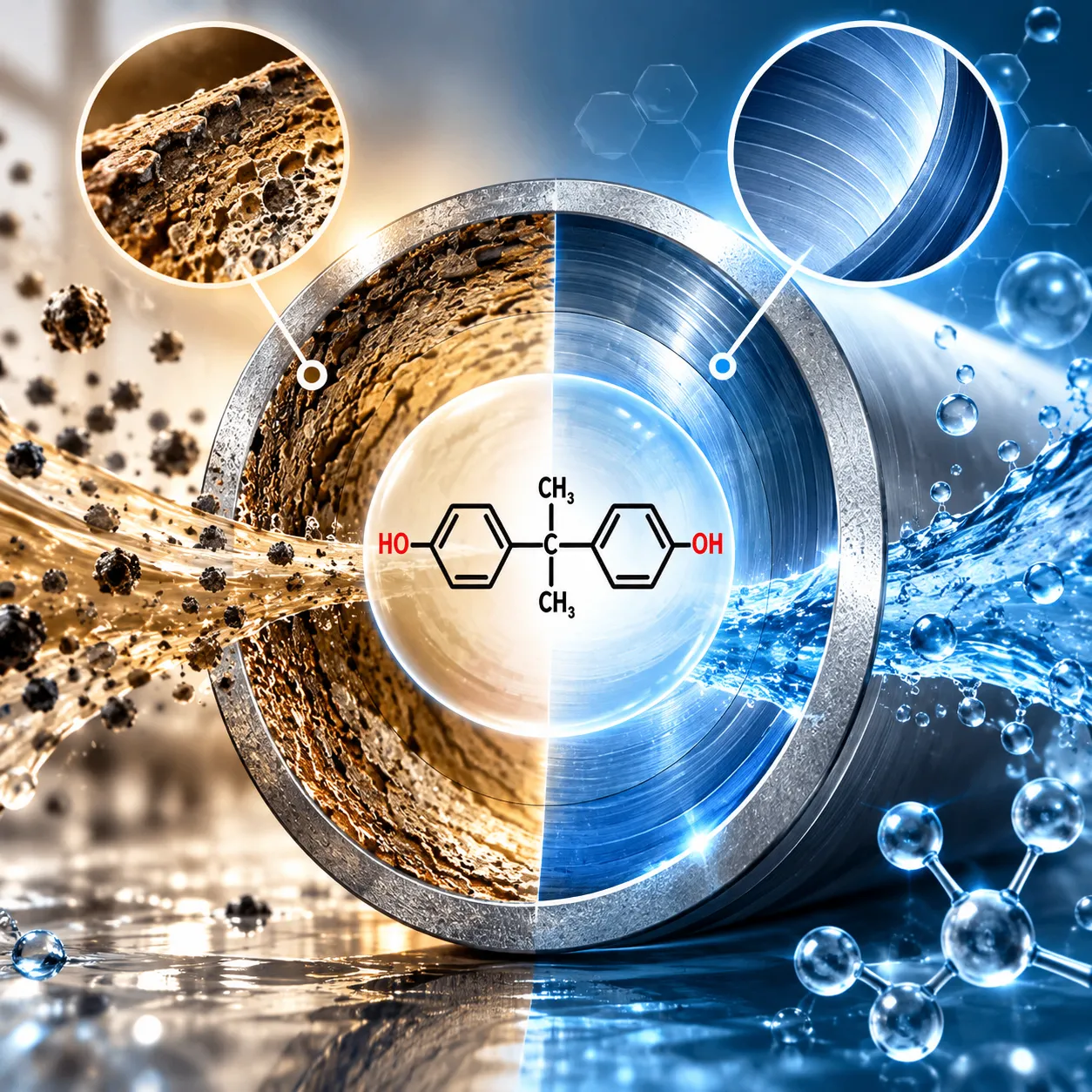
Targeted BPA remediation.
Multiple plumbing environments.
BISOXY-LINER® is intended for professional treatment of pipe systems with analytically confirmed BPA contamination or affected internal coatings. Suitability must be established through inspection, material identification and water testing.
BPA-Coated Hot-Water Pipes
Targeted remediation of hot-water recirculation networks affected by epoxy-lining degradation.
BPA-Coated Cold-Water Pipes
Professional chemical oxidation and surface passivation for cold-water plumbing lines.
Building Water Networks
In-situ pipe rehabilitation for residential and multi-story commercial buildings.
Commercial Plumbing Systems
Specialized chemical treatment for commercial and institutional pipe networks.
Food-Service Water Lines
Remediation support for potable water infrastructure in hospitality and food service.
Pipe Rehabilitation Projects
Alternative rehabilitation option for technically suitable pipes avoiding full replacement.
Four remediation functions within one treatment process
Targeted organic-contaminant oxidation (BPA-OXIDIZE™)
BISOXY® is designed to initiate oxidation of BPA and other susceptible organic residues present within affected pipe systems.
Sulfate and hydroxyl radical activity (DUAL-RADICAL™)
The brochure describes the generation of sulfate radicals and hydroxyl radicals, providing complementary reaction pathways for breaking down oxidizable organic compounds.
Magnesium oxide catalytic activation (MgO-ACTIVE™)
MgO provides an alkaline catalytic surface that may support oxidant activation, electron transfer and degradation of BPA under controlled process conditions.
Internal surface treatment (PIPE-PASSIVATE™)
Following cleaning and oxidation, the LINER stage is intended to condition or passivate the internal pipe surface. Any claim of permanent relining requires validated coating-thickness, adhesion and durability data.
Reactive oxidation supported by MgO surface chemistry
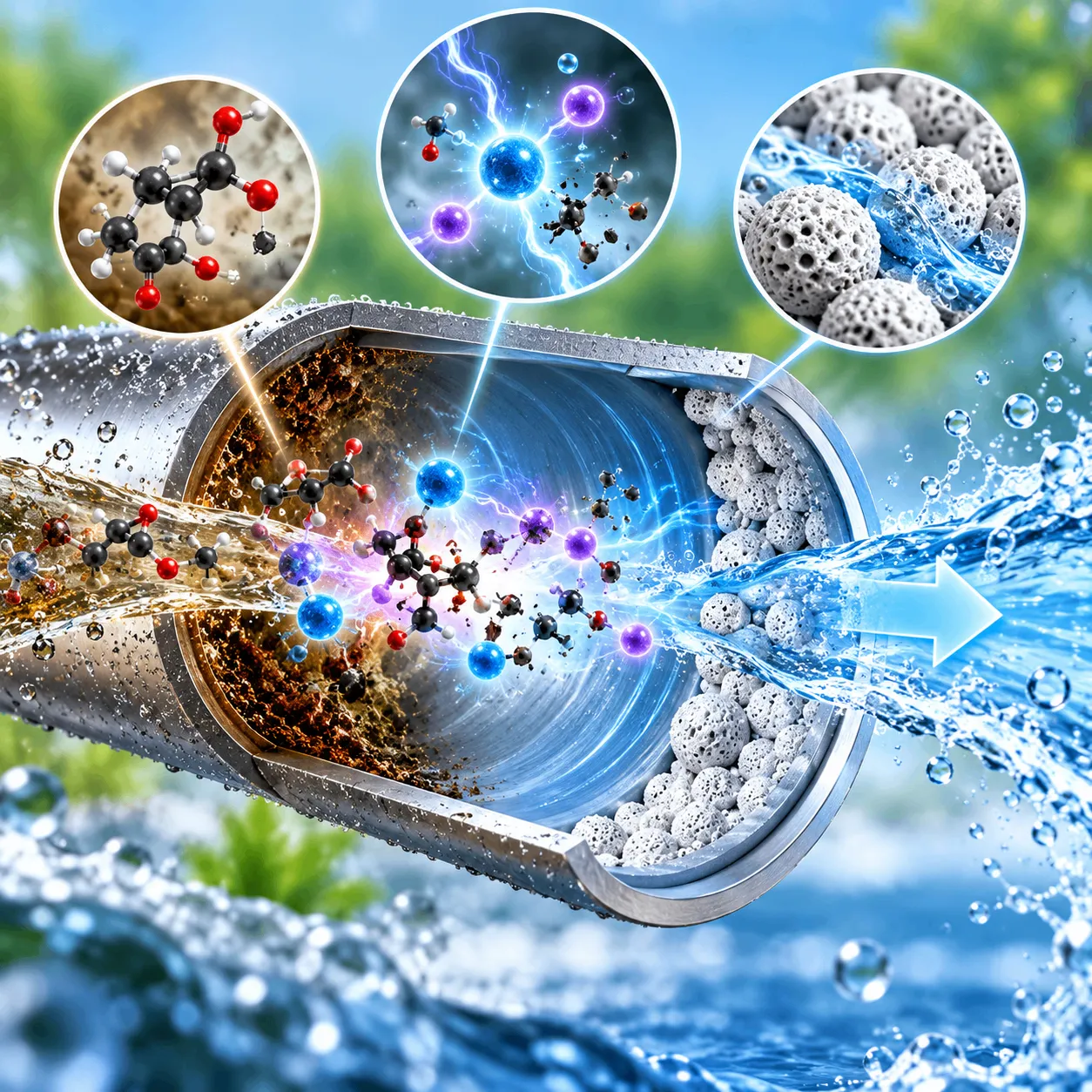
BISOXY-LINER® combines radical-based oxidation with an alkaline magnesium oxide treatment to address BPA residues and condition internal pipe surfaces.
- Sulfate-Radical Generation – Activated BISOXY® is described as producing sulfate radicals (SO₄•⁻) capable of attacking electron-rich organic structures.
- Hydroxyl-Radical Activity – Hydroxyl radicals (HO•) provide an additional non-selective oxidation pathway for BPA and other susceptible organic compounds.
- MgO Surface Activation – Magnesium oxide develops hydroxylated surface sites in contact with water. These alkaline sites may influence oxidant activation and contaminant degradation.
- Surface Conditioning – After contaminant treatment, the MgO-containing stage is intended to produce a conditioned internal surface (classification as passivation or lining requires material testing).
Professional Process Steps
A structured, multi-stage workflow designed for trained professionals to safely rehabilitate BPA-affected pipe networks.
1. Inspection & Testing
Inspect the pipe network, identify pipe materials and internal coatings, and test water for BPA and related bisphenols before remediation.
2. Isolation & Flushing
Isolate the treatment section from occupied outlets and flush loose material, debris and deposits from the network.
3. BISOXY® Oxidation
Circulate the professionally prepared BISOXY® treatment solution, maintaining validated pH, temperature and reaction time.
4. MgO LINER Stage
Introduce the MgO-based LINER stage according to an approved protocol to condition and passivate the internal pipe surface.
5. Neutralize & Rinse
Drain, neutralize and collect spent solution. Rinse thoroughly until oxidant, pH, turbidity and mineral residuals meet limits.
6. Verification & Return
Test for BPA and oxidation by-products, disinfect where required, and establish follow-up monitoring before recommissioning.
Download BISOXY-LINER® documents
Explore BISOXY-LINER®
pipe-remediation technology


Frequently
Asked Questions
Important information about BPA contamination, pipe remediation and BISOXY-LINER®.
Contact SupportAssess your BPA-affected pipe system
It starts with material identification and water testing.
Send us your pipe material data, plumbing configuration, test results for Bisphenol A and remediation objectives. Our specialists will help evaluate BISOXY-LINER® for your pipe rehabilitation project.