Capture hydrogen sulfide before it damages your process
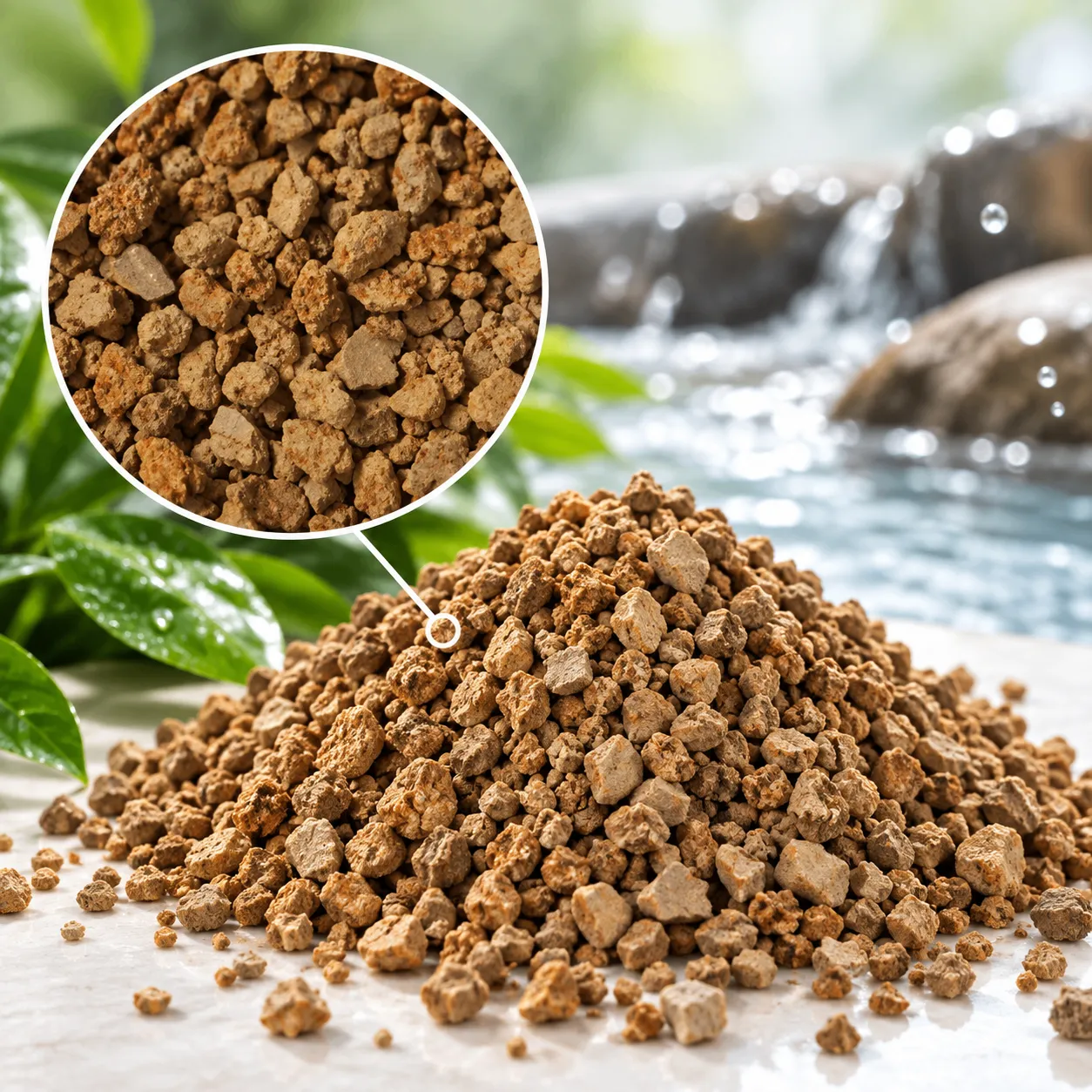
FERROLOX®-G is a porous, pelletized iron hydroxide-based gas purification media developed for removing hydrogen sulfide (H₂S) from biogas, landfill gas, digester gas and industrial gas streams.
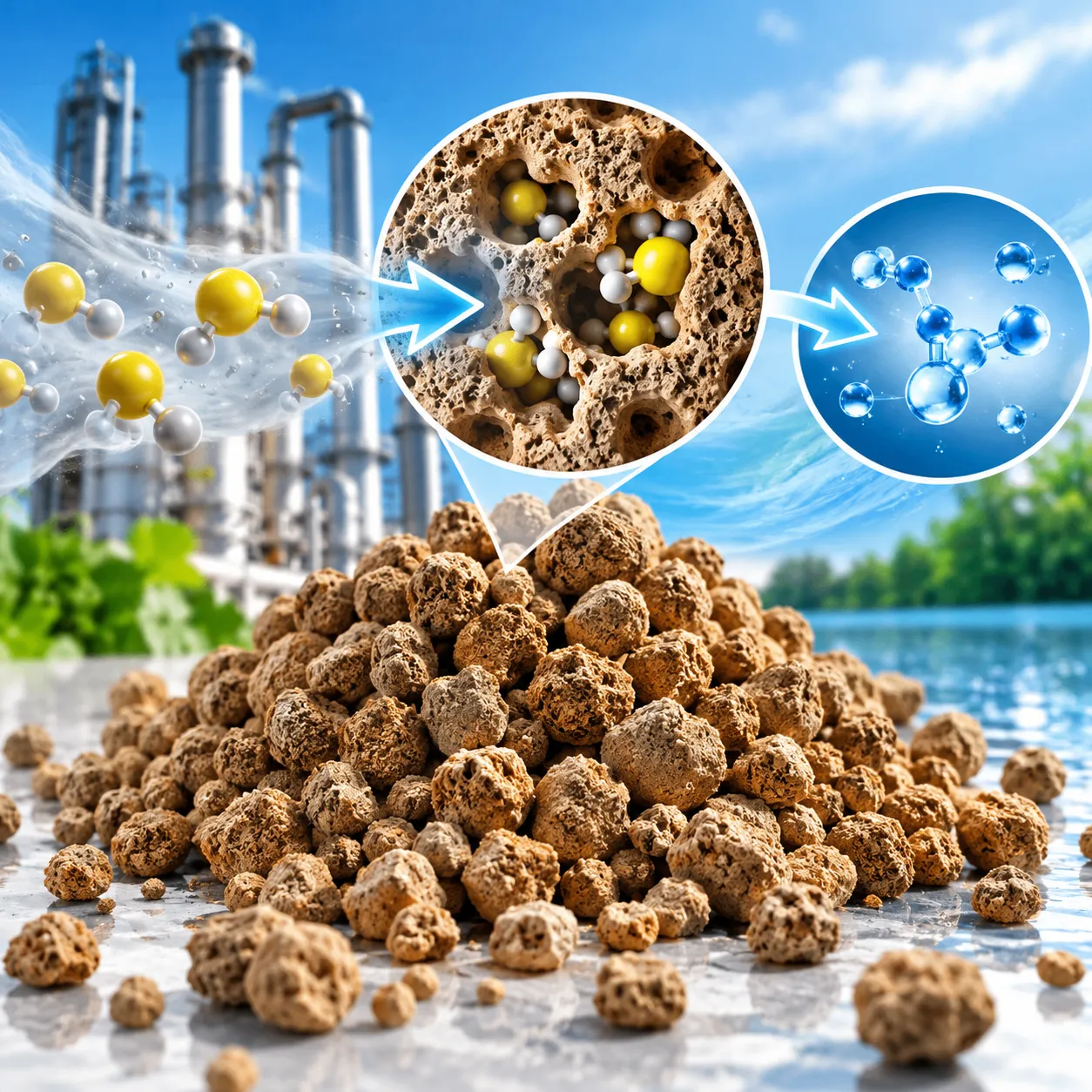
The specially formulated pellets combine iron hydroxide with alkalizing, binding and porosity-forming components. Moisture within the media allows hydrogen sulfide to dissolve and react with active iron-hydroxide sites, forming retained iron sulfide. FERROLOX®-G can be installed in fixed-bed absorbers or suitable moving-bed towers, providing a flexible solution for reducing H₂S before gas utilization, storage, combustion or downstream polishing.
High sulfur loading / Low-pressure gas treatment
One gas purification media.
Multiple H₂S challenges.
FERROLOX®-G supports hydrogen sulfide control across renewable gas, wastewater, petroleum and industrial gas applications. Every installation must be designed around gas composition, moisture, pressure, temperature, H₂S loading and required outlet quality.
Biogas and Anaerobic Digesters
Protecting combined heat and power (CHP) engines and gas upgrading equipment from H₂S corrosion.
Landfill Gas Purification
Reliable removal of hydrogen sulfide from collected municipal solid waste landfill gases.
Oil and Gas Processing
Gas sweetening and treatment in upstream and midstream hydrocarbon operations.
Refineries and Hydrocracking
Removal of sulfur compounds from refinery fuel gas and process streams.
Oil and Fuel Storage Tanks
Vapor-phase desulfurization for tank breathing and blanketing gases.
Wastewater Treatment Gas
Scrubbing odorous hydrogen sulfide emissions from municipal pump stations and headworks.
Four purification functions working inside one pellet
Reactive hydrogen sulfide capture (H₂S-CAPTURE™)
Moisture-supported iron hydroxide chemistry converts hydrogen sulfide into retained iron-sulfur compounds, reducing H₂S in the treated gas stream.
Moisture-assisted reaction (MOISTURE-ACTIVE™)
A controlled moisture level allows H₂S to dissolve before reacting with the iron-based active phase. The brochure specifies at least 40% relative gas humidity, with 60–80% described as the preferred non-condensing range.
Controlled oxidative conversion (OXY-REACT™)
Under professionally controlled conditions, oxygen can convert iron sulfide back toward iron hydroxide while producing elemental sulfur. Because this reaction is strongly exothermic, oxygen introduction requires engineered monitoring and safety controls.
Porous pellets with low gas-flow resistance (POROUS-FLOW™)
Multiple pellet-size grades support fixed- and moving-bed systems. The porous structure provides accessible reactive surfaces while properly selected pellets help maintain gas distribution and manageable pressure loss.
Iron chemistry engineered for gas desulfurization
FERROLOX®-G uses a moisture-assisted iron hydroxide reaction cycle to capture hydrogen sulfide and retain sulfur within the pellet structure.
- Moisture-Assisted H₂S Capture – Hydrogen sulfide first dissolves in moisture present within the media. The resulting sulfide species react with iron hydroxide to form retained iron sulfide.
- Controlled Oxidative Reaction – When oxygen is introduced under controlled conditions, iron sulfide can be oxidized, restoring part of the iron-hydroxide active phase while producing elemental sulfur.
- Progressive Sulfur Loading – Elemental sulfur accumulates on the pellet surface and within its pores. As sulfur loading increases, active sites become blocked and purification efficiency gradually declines.
- Fixed- or Moving-Bed Operation – FERROLOX®-G can be applied in replaceable fixed beds or moving-bed towers where loaded material is discharged and fresh media is introduced from the top.
Technical Data
Key properties, pellet sizes, operating conditions, and reference capacities for FERROLOX®-G.
Physical & Operating Parameters
| Parameter / Property | Published Specification |
|---|---|
| Product type | Pelletized gas purification compound |
| Active chemistry | Iron hydroxide with alkalizing, binding and porosity-forming compounds |
| Chemical formula | FeO(OH) |
| Appearance | Light-brown, variably shaped pellets |
| Primary contaminant | Hydrogen sulfide in gas streams |
| Operating systems | Fixed-bed and moving-bed absorbers |
| Raw-gas H₂S concentration | Approximately 50–15,000 ppm |
| Media fill height | Approximately 0.5–12 m |
| Filter-bed pressure loss | Less than 1–15 mbar |
| Operating pressure | Atmospheric to approximately 25 bar(g) |
| Empty-vessel contact time | Approximately 20 seconds–3 minutes |
| Gas velocity through bed | Approximately 2–15 m/min |
| Relative gas humidity | Min. 40% (Preferred: 60–80%, non-condensing) |
| Pellet moisture | Min. 5% (Preferred: 10–15%) |
Available Pellet Sizes
- Moving-bed columns: 5–25 mm, 8–25 mm, and 10–25 mm grades.
- Fixed-bed columns: 2–4 mm, 2–8 mm, and 4–8 mm grades.
Published Reference Capacity
- Approximately 20–40% sulfur by dry media weight
- Approximately 265–710 g H₂S / kg of dry FERROLOX®-G
- Approximately 232–621 g H₂S / kg at the brochure’s referenced 12.5% pellet moisture
Download FERROLOX®-G documents
Explore FERROLOX®-G
gas purification technology


Frequently
Asked Questions
Important information about FERROLOX®-G selection, operation, performance and safety.
Contact SupportGet a reliable gas purification solution
It starts with your complete gas analysis.
Send us your gas-composition data, H₂S concentration, flow rate, moisture content, temperature and operating pressure. Our specialists will help evaluate FERROLOX®-G for your gas purification system.