Capture persistent PFAS with a modified carbon surface
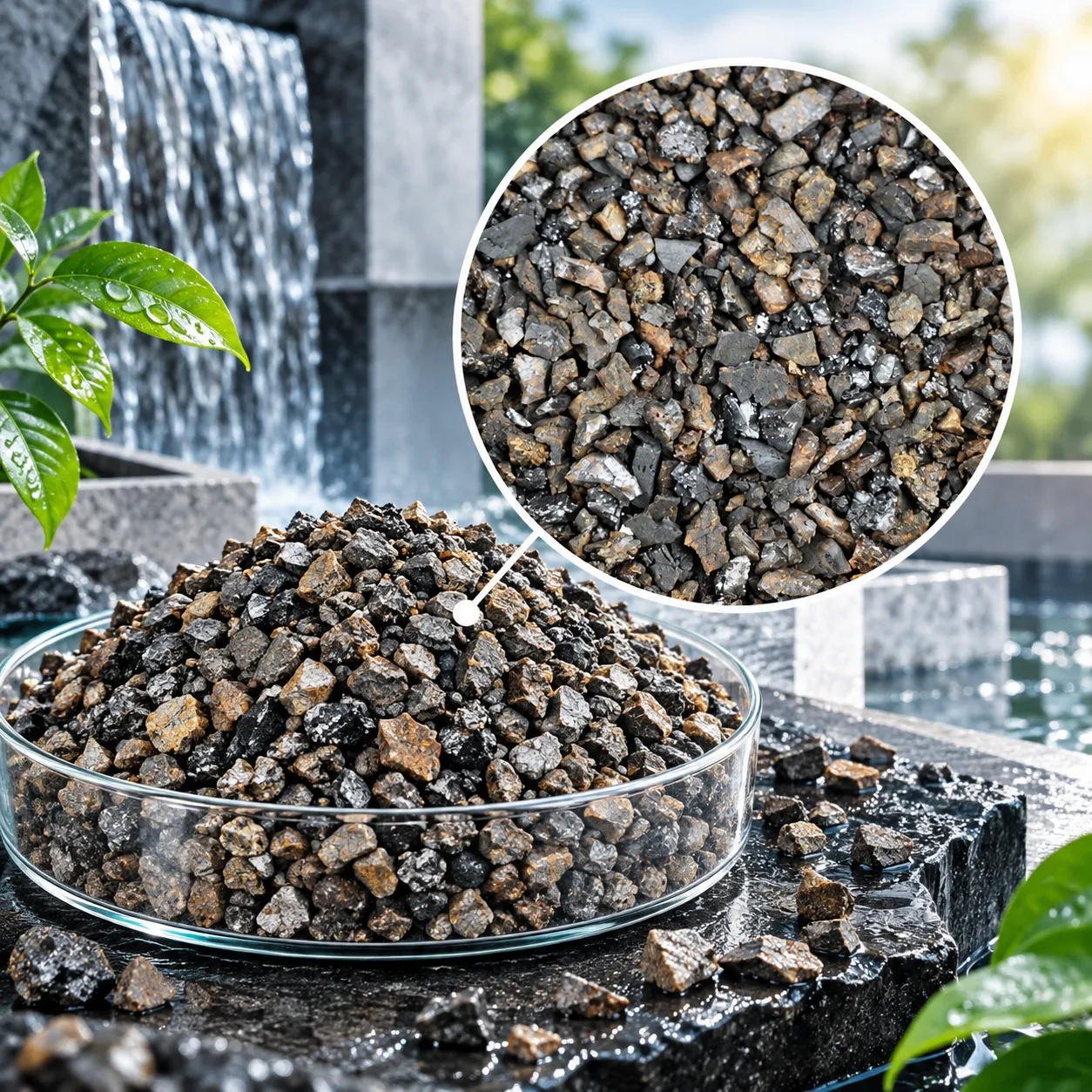
CATALYTIC CARBON-MG® is a surface-modified coconut-shell activated carbon developed for adsorption of PFOA, PFOS and selected PFAS from contaminated water.
The media combines high-surface-area granular activated carbon with zero-valent iron and magnesium-based surface modification. Its porous carbon structure provides hydrophobic adsorption sites, while the modified mineral surface is intended to improve electrostatic interaction with anionic PFAS molecules. CATALYTIC CARBON-MG® can be installed in upflow or downflow vessels for drinking-water, groundwater and industrial-wastewater applications.
PFAS capture / Modified surface affinity
One PFAS adsorber.
Multiple treatment environments.
CATALYTIC CARBON-MG® can be integrated into municipal, residential, commercial and industrial treatment systems. Performance must be confirmed for the complete PFAS profile and actual water matrix.
Municipal Drinking Water
Advanced fixed-bed filtration for public water supplies targeting ng/L PFAS limits.
PFAS-Impacted Groundwater
Remediation treatment for aquifers and well water contaminated with PFOA, PFOS and related compounds.
Point-of-Entry Treatment
Whole-building pressure vessel systems for residential and commercial protection.
Industrial PFAS Wastewater
Targeted adsorption treatment for industrial manufacturing and process effluents.
Landfill-Leachate Polishing
Adsorption polishing barrier for complex waste streams containing persistent organics.
AFFF-Impacted Water
Remediation support for fire-fighting foam (AFFF) release sites and runoff water.
Four PFAS-treatment functions within one media
Porous carbon adsorption (PFAS-CAPTURE™)
The coconut-shell carbon structure captures PFAS through hydrophobic and pore-filling interactions, with generally stronger adsorption expected for longer-chain compounds.
Magnesium-modified surface affinity (Mg-SURFACE™)
The magnesium-based modification is intended to improve interaction between the media surface and negatively charged PFAS head groups.
Stabilized zero-valent iron structure (ZVI-ACTIVE™)
Zero-valent iron is incorporated as an additional reactive surface component. Direct PFAS destruction by ZVI must be demonstrated through compound-specific mass-balance testing.
Final low-level water polishing (PFAS-POLISH™)
The media can serve as a polishing barrier for reducing residual PFAS. Meeting ng/L treatment targets requires conservative design, sensitive analysis and breakthrough monitoring.
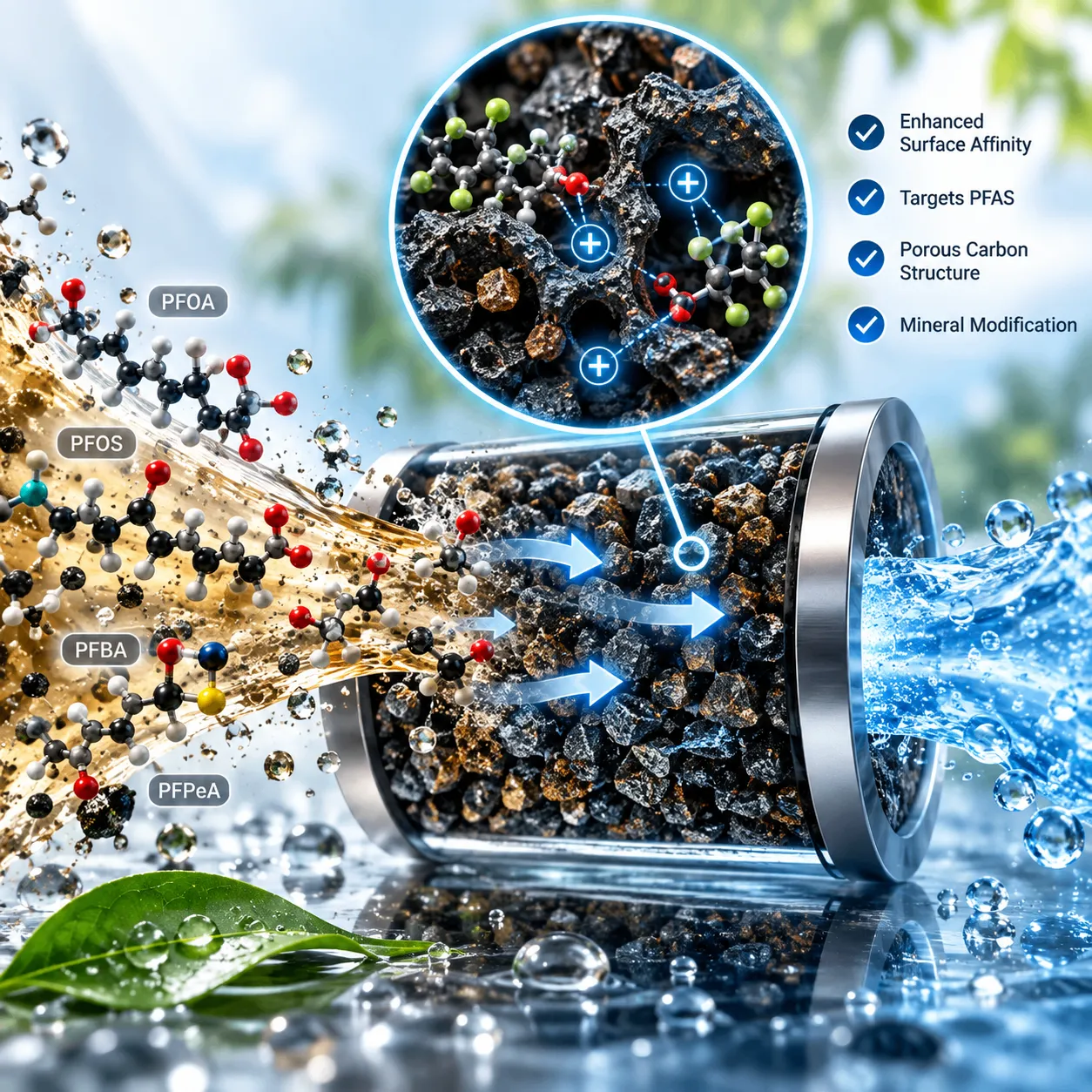
Carbon affinity enhanced by Mg/ZVI surface modification
CATALYTIC CARBON-MG® combines porous-carbon adsorption with an engineered mineral surface intended to improve PFAS capture.
- Hydrophobic Tail Adsorption – The fluorinated carbon tail of a PFAS molecule interacts with hydrophobic regions within the activated-carbon pore structure.
- Ionic Head-Group Interaction – Many PFAS occur as negatively charged anions in water. Surface chemistry can influence attraction or repulsion of their carboxylate or sulfonate head groups.
- Chain-Length Selectivity – Long-chain PFAS such as PFOA and PFOS generally adsorb more strongly to GAC than short-chain compounds such as PFBA and PFPeA.
- Breakthrough-Controlled Treatment – Adsorption sites become progressively occupied. Regular compound-specific PFAS analysis determines when the lead vessel or media must be replaced.
Technical Data
Key properties, operating parameters, and specifications for CATALYTIC CARBON-MG® media.
Physical & Operating Properties
| Property | Published Value |
|---|---|
| Base material | Modified coconut-shell activated carbon |
| Surface modification | ZVI and magnesium-based treatment |
| Appearance | Greenish-black granules |
| Particle size | 0.6–2.4 mm (U.S. mesh size: 8 × 30) |
| BET surface area | 2,000–2,500 m²/g |
| Bulk density | 640–650 kg/m³ |
| Moisture content | Maximum 5% |
| Ball-pan hardness | Minimum 98% |
| Published extract pH value | 9.5 |
| Expected service life | 2–5 years, condition-dependent |
| Flow direction | Upflow or downflow |
| Downflow freeboard | 25–35% |
| Filtration rate | 10–25 BV/h |
| Backwash velocity | 10–20 m/h |
| Bed depth | 80–100 cm (Max: 120 cm) |
| Minimum stated EBCT | 90 seconds |
U.S. Regulatory Context (As of August 2026)
- PFOA MCL: Enforceable limit of 4.0 ng/L.
- PFOS MCL: Enforceable limit of 4.0 ng/L.
- Implementation deadlines are subject to ongoing regulatory review.
Packaging Information
- Standard bag: 30 L / approx. 19.2 kg (40 bags per pallet)
- Bulk bag: 1,000 L / approx. 640 kg
Download CATALYTIC CARBON-MG® documents
Explore CATALYTIC CARBON-MG®
PFAS technology


Frequently
Asked Questions
Essential information about CATALYTIC CARBON-MG®, PFAS adsorption and media management.
Contact SupportBuild your PFAS treatment solution
It starts with compound-specific water analysis.
Send us your complete PFAS profile, TOC, background water quality and flow requirements. Our specialists will help evaluate CATALYTIC CARBON-MG® for your application and recommend the necessary treatment configuration.