Oxidize dissolved pollutants / Capture the remaining color
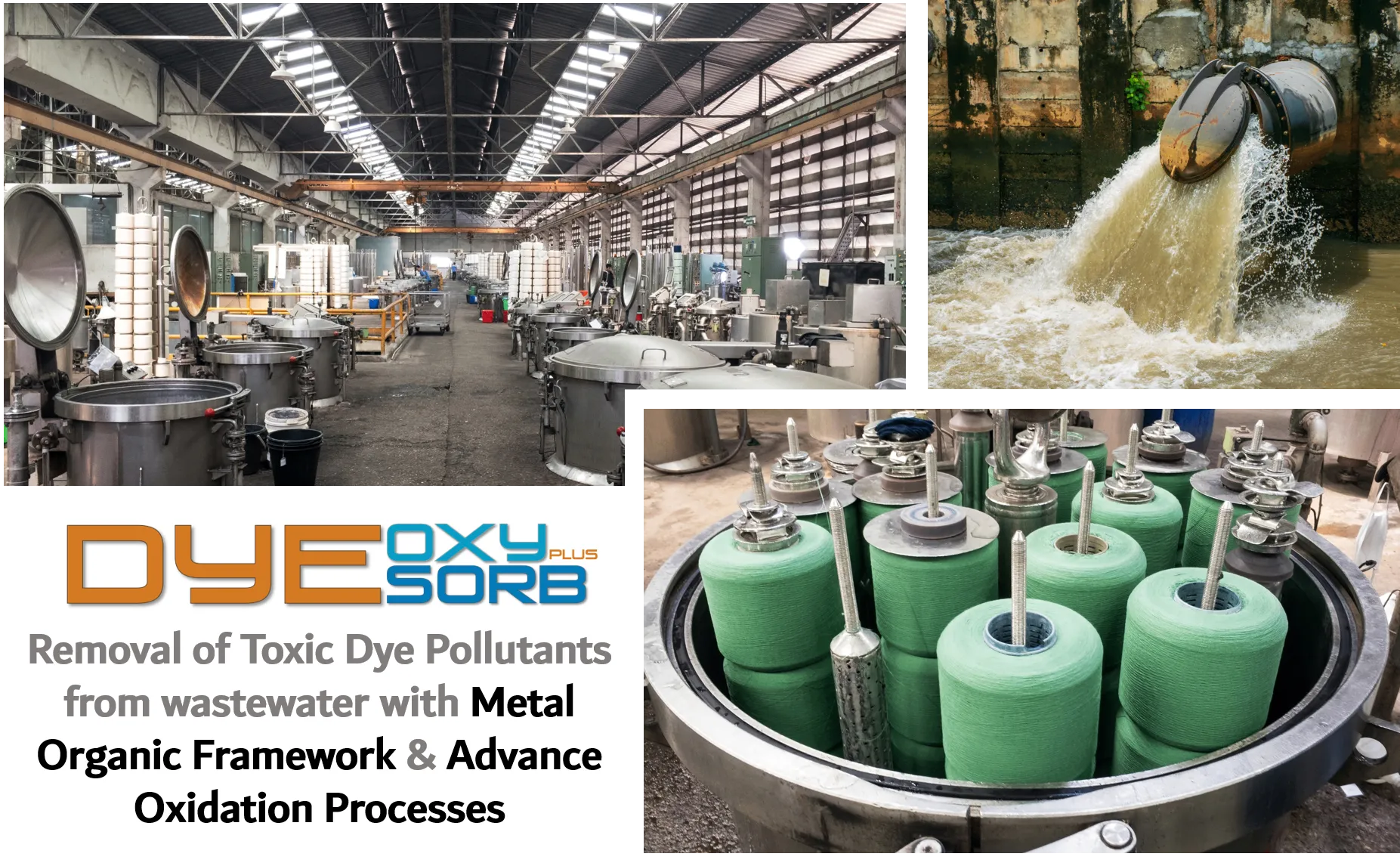
DYEOXY® and DYESORB® form an integrated treatment platform for reducing dyes, color and associated organic pollution in industrial water and wastewater.
The process combines two complementary technologies. DYEOXY® is a crystalline advanced-oxidation product intended to generate sulfate and hydroxyl radicals, which attack complex dye molecules and other oxidizable organics. DYESORB® is a porous, zinc-based adsorber designed to capture residual cationic and anionic dyes and provide final color polishing. The products may be incorporated into oxidation, adsorption and polishing stages selected according to wastewater composition and discharge or reuse requirements.
Advanced oxidation / Selective adsorption
One integrated process.
Multiple color-intensive industries.
DYEOXY® and DYESORB® can be configured for wastewater decolorization, organic-load reduction and final polishing. Treatment must be validated using representative wastewater because dye chemistry varies significantly between industries.
Textile and Dyeing Wastewater
Decolorization and COD reduction for textile manufacturing and dyeing effluent.
Leather and Tannery Effluent
Treatment of complex organic dyes and wastewater from tanning and finishing processes.
Pulp, Paper and Printing
Color removal and organic pollutant management for paper-mill and printing wastewater.
Plastic and Pigment Manufacturing
Advanced oxidation and adsorption polishing for pigment and polymer production waste.
Food and Beverage Color Removal
Polishing and color reduction in food processing and beverage manufacturing effluent.
Industrial Water Reuse
Advanced treatment supporting closed-loop industrial water recovery and reuse.
Four treatment functions working as one platform
Porous dye adsorption
DYESORB® provides a porous granular surface for capturing dissolved colorants and selected organic compounds from industrial wastewater.
Sulfate-radical oxidation
Activated DYEOXY® chemistry is described as producing sulfate radicals that attack chromophoric structures and other oxidizable organic molecules.
Complementary hydroxyl-radical activity
Hydroxyl radicals provide an additional oxidation pathway, supporting the breakdown of a broad range of organic structures under suitable reaction conditions.
Final effluent polishing
Following oxidation, DYESORB® can capture residual dyes, color-bearing intermediates and other adsorbable organics before discharge, reuse or further treatment.
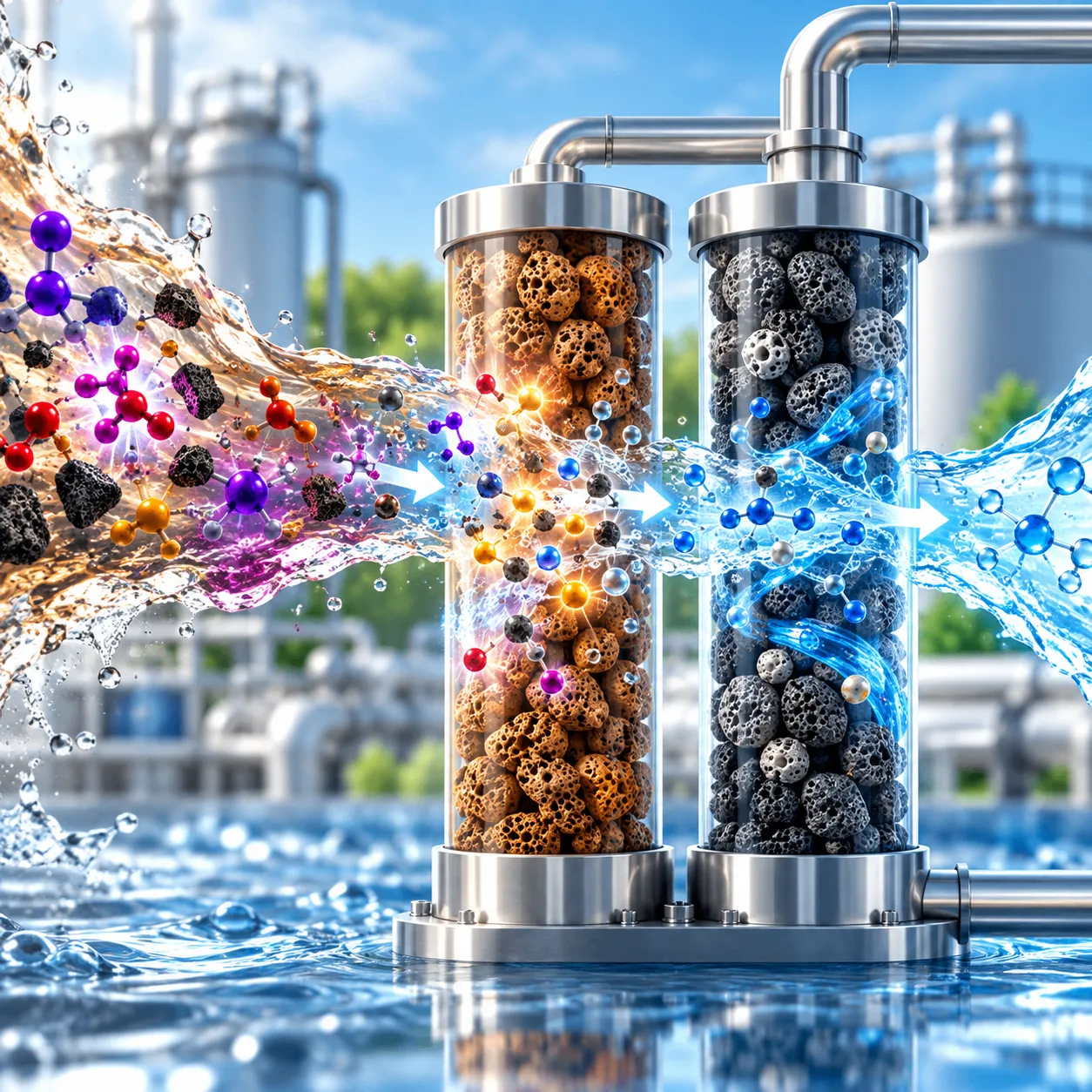
Advanced oxidation followed by selective adsorption
The DYEOXY® + DYESORB® process combines contaminant destruction with physical capture to address both dissolved dye molecules and residual oxidation products.
- Radical Generation – Under validated activation conditions, DYEOXY® is intended to generate sulfate radicals and hydroxyl radicals capable of attacking electron-rich structures within organic dye molecules.
- Chromophore Breakdown – Radical oxidation disrupts the molecular structures responsible for visible color. Decolorization, however, does not automatically confirm complete mineralization or detoxification.
- Selective Dye Adsorption – DYESORB® is described as a zinc-based porous framework capable of adsorbing cationic and anionic dyes, although affinity and capacity vary by molecule.
- Adsorption Polishing – The fixed-bed DYESORB® stage captures residual color and adsorbable organic matter after oxidation, helping improve final treated-water quality.
Download DYEOXY® and DYESORB® documents
Explore advanced dye-treatment technology


Frequently
Asked Questions
Essential information about DYEOXY®, DYESORB® and integrated dye-wastewater treatment.
Contact SupportBuild your industrial dye-treatment solution
It starts with your wastewater and dye profile.
Send us your wastewater-quality data, dye composition, COD, flow requirements and discharge objectives. Our specialists will help evaluate DYEOXY® and DYESORB® for your application and recommend the necessary treatment configuration.