Control microorganisms / Protect cooling-system performance
BIODOS-CB™ is a liquid biocidal treatment developed to control microbiological contamination and biofilm in industrial cooling-water systems.
BIODOS-CB™ is intended for cooling towers, evaporative coolers, heat exchangers, condensers and recirculating industrial cooling circuits. According to the datasheet, its broad-spectrum activity targets bacteria, algae, fungi, yeasts, slime-forming microorganisms and biofilm-forming populations. By controlling microbiological growth, an appropriately managed treatment programme can help maintain cleaner heat-transfer surfaces, reduce microbiologically influenced corrosion and improve cooling-system hygiene. Application must follow the product’s authorized label, biocidal registration, site risk assessment and microbiological monitoring programme.
Bacteria, algae and biofilm / One controlled treatment programme
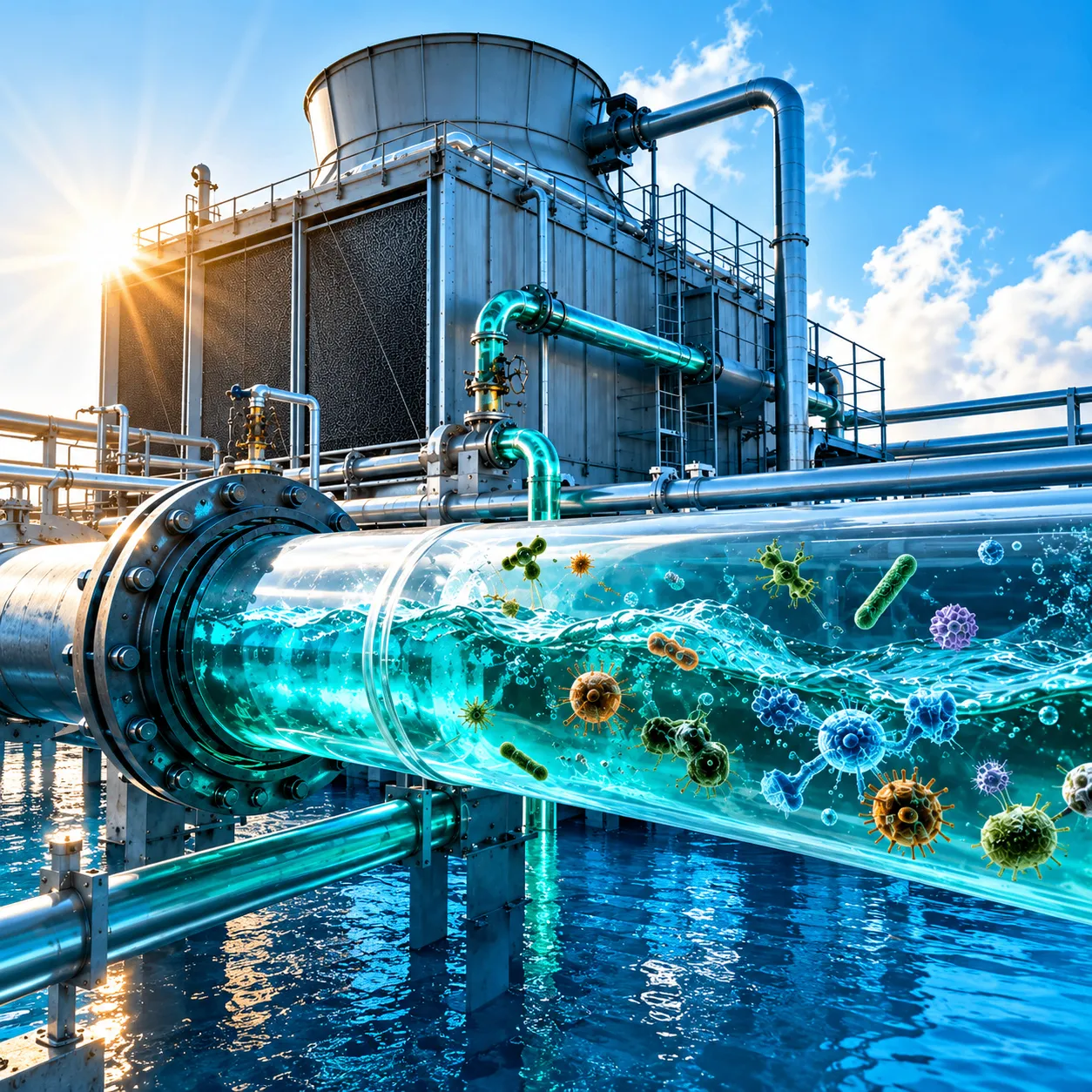
One microbiological-control programme.
Multiple cooling applications.
BIODOS-CB™ can be evaluated for continuous or intermittent treatment of industrial cooling-water systems where bacteria, algae, fungi, slime or biofilm affect hygiene and operating performance.
Cooling Towers
Microbiological control for open evaporative cooling systems exposed to nutrients, sunlight and airborne contamination.
Evaporative Coolers
Helps manage bacterial, algal and biofilm growth in evaporative cooling equipment.
Heat Exchangers
Supports cleaner heat-transfer surfaces by controlling microbiological deposits.
Condensers
Biofilm-control support for suitable industrial condenser-water circuits.
Industrial Cooling Circuits
Treatment of recirculating process-cooling systems in manufacturing facilities.
Power, Chemical and Petrochemical
Microbial-control programmes for power stations, refineries and chemical-processing facilities.
Four microbiological-control functions / In one treatment
Broad bacterial control (BACTERIA-CONTROL)
Designed to reduce susceptible planktonic and surface-associated bacteria in industrial cooling-water systems.
Algal-growth management (ALGAE-GUARD)
Helps control susceptible algae in light-exposed cooling towers and evaporative systems where growth can obstruct water distribution.
Slime and biofilm control (BIOFILM-ACTIVE)
Targets microorganisms associated with slime formation and biofilm development, subject to concentration and contact-time requirements.
Microbiologically influenced corrosion support (MIC-GUARD)
By reducing microbial populations and deposits, BIODOS-CB™ may support a broader programme for controlling microbiologically influenced corrosion.
How biological growth affects cooling systems
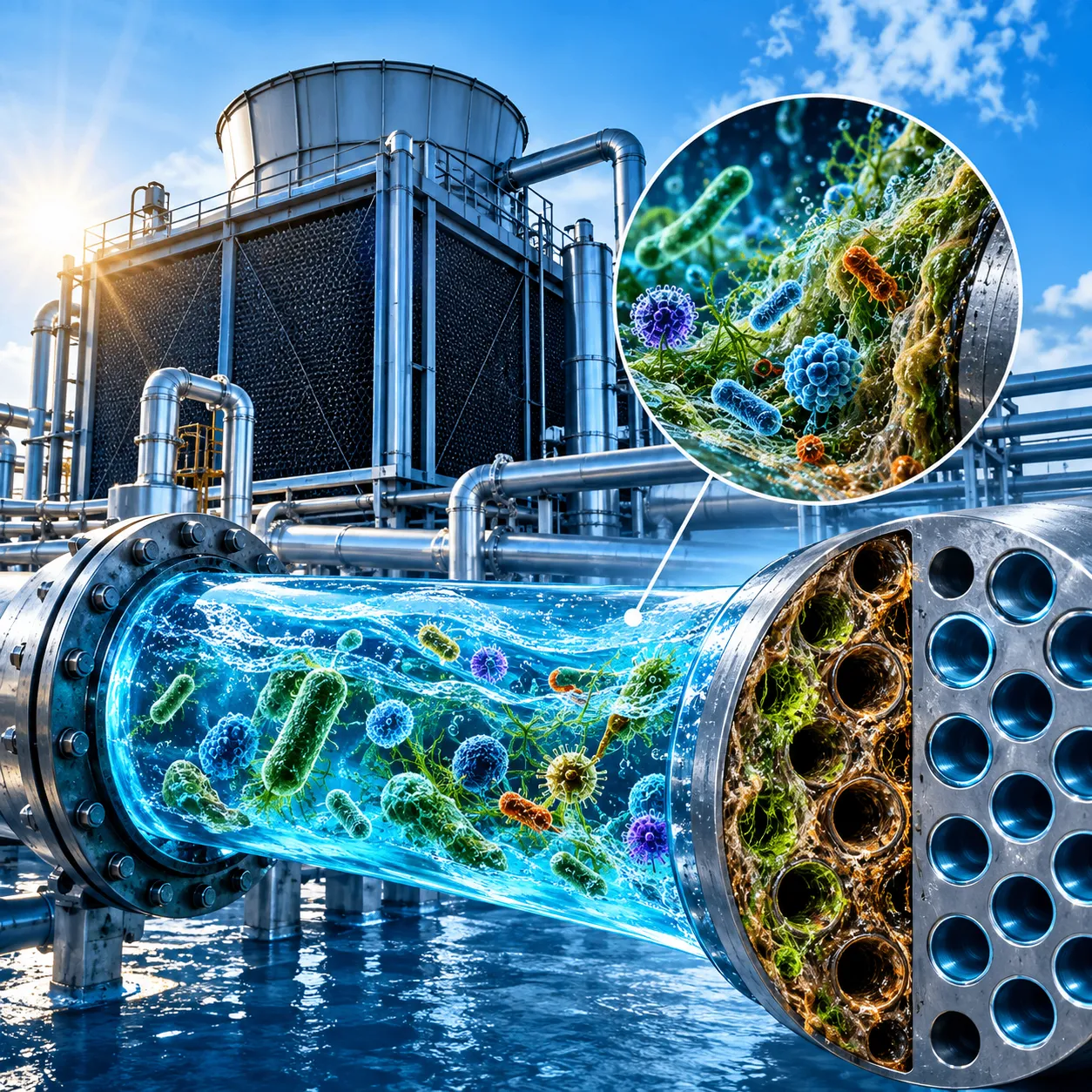
Cooling systems provide moisture, nutrients, oxygen and favorable temperatures for microorganisms. Uncontrolled growth can develop into structured biofilms that reduce efficiency and protect embedded organisms.
- Planktonic Microorganism Control – Free-floating microorganisms in recirculating water are exposed to the biocide during treatment (efficacy depends on active concentration, contact time, temperature and water quality).
- Biofilm Matrix Disruption – Mature biofilms contain microorganisms within an extracellular polymeric matrix; effective removal may require biocide treatment together with biodispersants and physical cleaning.
- Heat-Transfer Protection – Even relatively thin biological deposits insulate heat-transfer surfaces, restrict flow and create differential aeration areas.
- MIC Risk Reduction – Sulfate-reducing, iron-related and slime-forming bacteria contribute to localized corrosion; microbial control reduces one risk factor but does not replace complete corrosion management.
Download BIODOS-CB™ documents
Explore BIODOS-CB™ Posters


Frequently
Asked Questions
Essential information about applying BIODOS-CB™ in industrial cooling-water systems.
Contact SupportBuild a verified cooling-water hygiene programme
Reliable microbial control begins with monitoring, correct dosing and responsible operation.
Send us your cooling system volume, biological challenges, monitoring results and treatment objectives. Our specialists will help evaluate BIODOS-CB™ for your cooling tower or industrial circuit.
