Catalytic filtration that transforms difficult water
KATALYST LIGHT® is an advanced, lightweight catalytic filtration medium developed and manufactured in Germany for the reduction of iron, manganese, hydrogen sulfide, turbidity and suspended solids.
Engineered with a high-content gamma manganese dioxide coating on ZEOSORB®, KATALYST LIGHT® combines catalytic oxidation, co-precipitation, sorption and fine mechanical filtration within one durable granular medium. Its rough, highly porous surface provides extensive contact between the water and active MnO₂ coating. This supports contaminant oxidation and retention while filtering particles down to approximately 3 microns under suitably designed operating conditions. KATALYST LIGHT® can be used in residential, commercial, industrial and municipal systems. Depending on the water chemistry and treatment objectives, it can also support the reduction of arsenic, zinc, copper, lead, radium, uranium and other heavy metals or radionuclides through iron-assisted co-precipitation[cite: 3].
One media / Multiple treatment mechanisms[cite: 3]
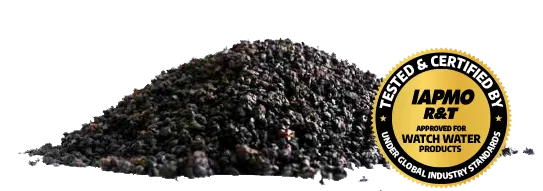
One catalytic media.
Unlimited treatment possibilities[cite: 3].
KATALYST LIGHT® can be integrated into automatic or manually backwashed pressure filters and gravity filtration systems. Final system design must consider contaminant concentration, pH, oxidation-reduction potential, temperature, service flow and available backwash flow[cite: 3].
Iron, Manganese and H₂S Reduction
Catalytic treatment of groundwater containing dissolved iron, manganese and hydrogen sulfide[cite: 3].
Municipal and Drinking-Water Filtration
Fine filtration and contaminant reduction for municipal and community water systems[cite: 3].
Industrial Wastewater Treatment
Reduction of suspended solids, turbidity and selected metals in industrial process water[cite: 3].
Reverse Osmosis Pretreatment
Helps reduce iron, manganese, turbidity and SDI before membrane treatment[cite: 3].
Arsenic and Heavy-Metal Reduction
Supports iron-assisted co-precipitation and filtration of arsenic and selected heavy metals[cite: 3].
Radionuclide-Contaminated Water
Treatment support for radium, uranium and selected radionuclides under suitable water conditions[cite: 3].
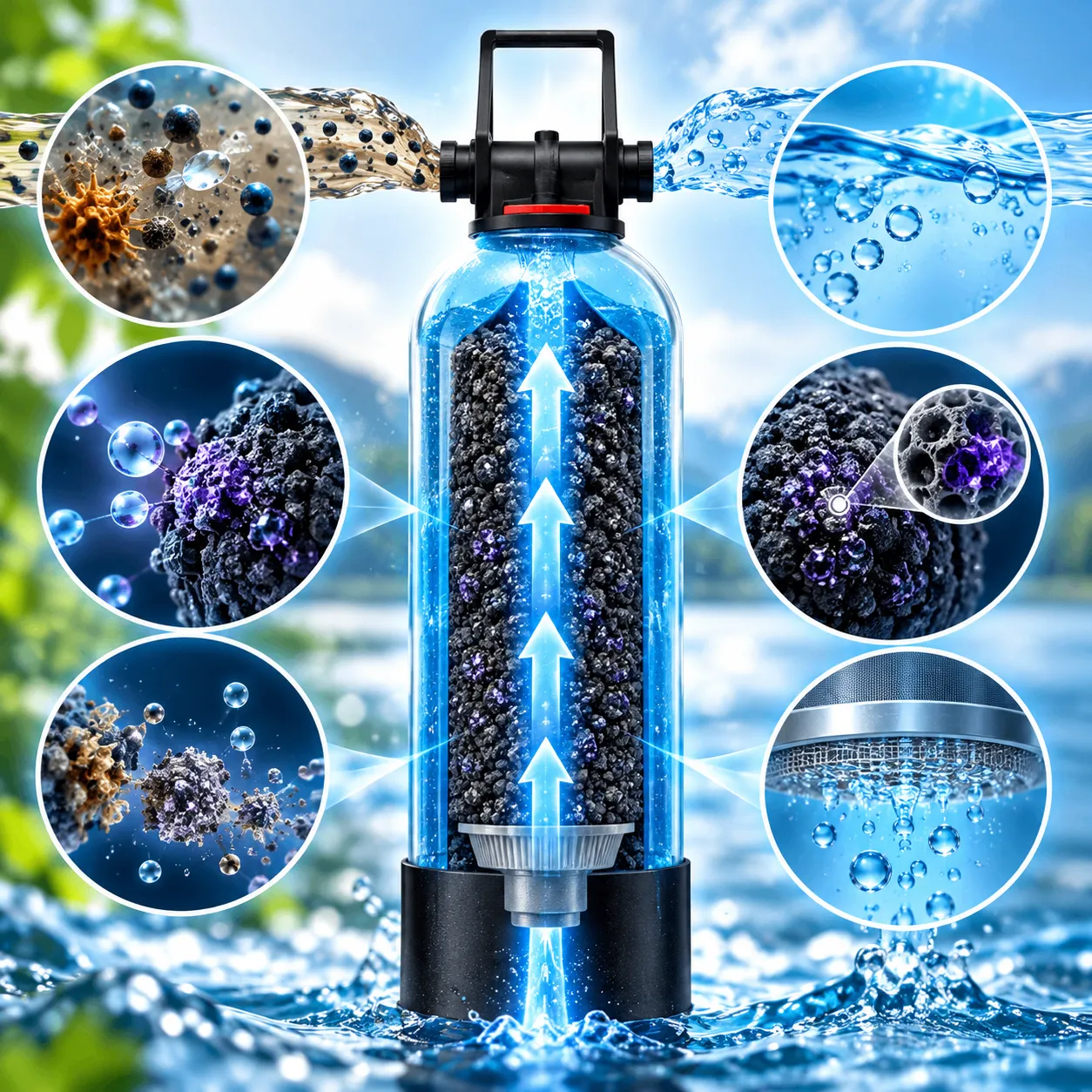
Four treatment mechanisms engineered into one media[cite: 3]
Catalytic oxidation
The gamma MnO₂ coating provides an active catalytic surface for the oxidation of dissolved iron, manganese and hydrogen sulfide[cite: 3]. When the raw water has insufficient oxidation-reduction potential, a compatible oxidant may be required[cite: 3].
Fine mechanical filtration
The uniform granular structure captures suspended solids, sediment and turbidity[cite: 3]. Under appropriately designed conditions, the media provides filtration down to approximately 3 microns[cite: 3].
Co-precipitation and sorption
Oxidized iron and manganese form particles that can capture or co-precipitate arsenic, radionuclides and selected heavy metals before being retained inside the media bed[cite: 3].
High-surface-area hydraulic filtration
The rough, porous surface supports extensive water-to-media contact while the comparatively low bulk density helps reduce backwash-water demand compared with heavier catalytic media[cite: 3].
Science and technology behind KATALYST LIGHT®[cite: 3]
KATALYST LIGHT® is composed primarily of ZEOSORB® coated with high-content gamma manganese dioxide[cite: 3]. Its performance is based on catalytic oxidation, contaminant precipitation, surface sorption and fine filtration[cite: 3].
- High Gamma MnO₂ Content – The media contains approximately 10% gamma manganese dioxide, creating an active surface for catalytic oxidation and contaminant precipitation[cite: 3].
- ZEOSORB® Base Material – The lightweight, porous base provides a large filtration surface, high physical stability and a lower bulk density than many traditional manganese-based media[cite: 3].
- Three-Stage Treatment Mechanism – Dissolved contaminants are oxidized, transformed into insoluble particles and subsequently retained within the filter bed[cite: 3].
- High-Resolution Filtration – Uniform 0.6–1.4 mm granules support filtration down to approximately 3 microns when operated at the correct service velocity[cite: 3].
Download our latest KATALYST LIGHT® documents
Explore the KATALYST LIGHT®
poster library


Frequently
Asked Questions
Find answers about KATALYST LIGHT® performance, applications, oxidation requirements, system design and maintenance[cite: 3].
Contact SupportCalculate Your KATALYST LIGHT® System
Determine the required media volume based on your target service flow rate (gpm or m³/h).
Sizing Recommendation
Get the right filtration solution
It all starts with your water analysis[cite: 3].
Send us your iron, manganese, hydrogen sulfide, arsenic, pH, ORP, turbidity and flow-rate data. Our water-treatment specialists will help determine the appropriate media volume, vessel size, service flow and backwash requirements[cite: 3].