Two adsorption chemistries / One high-capacity media
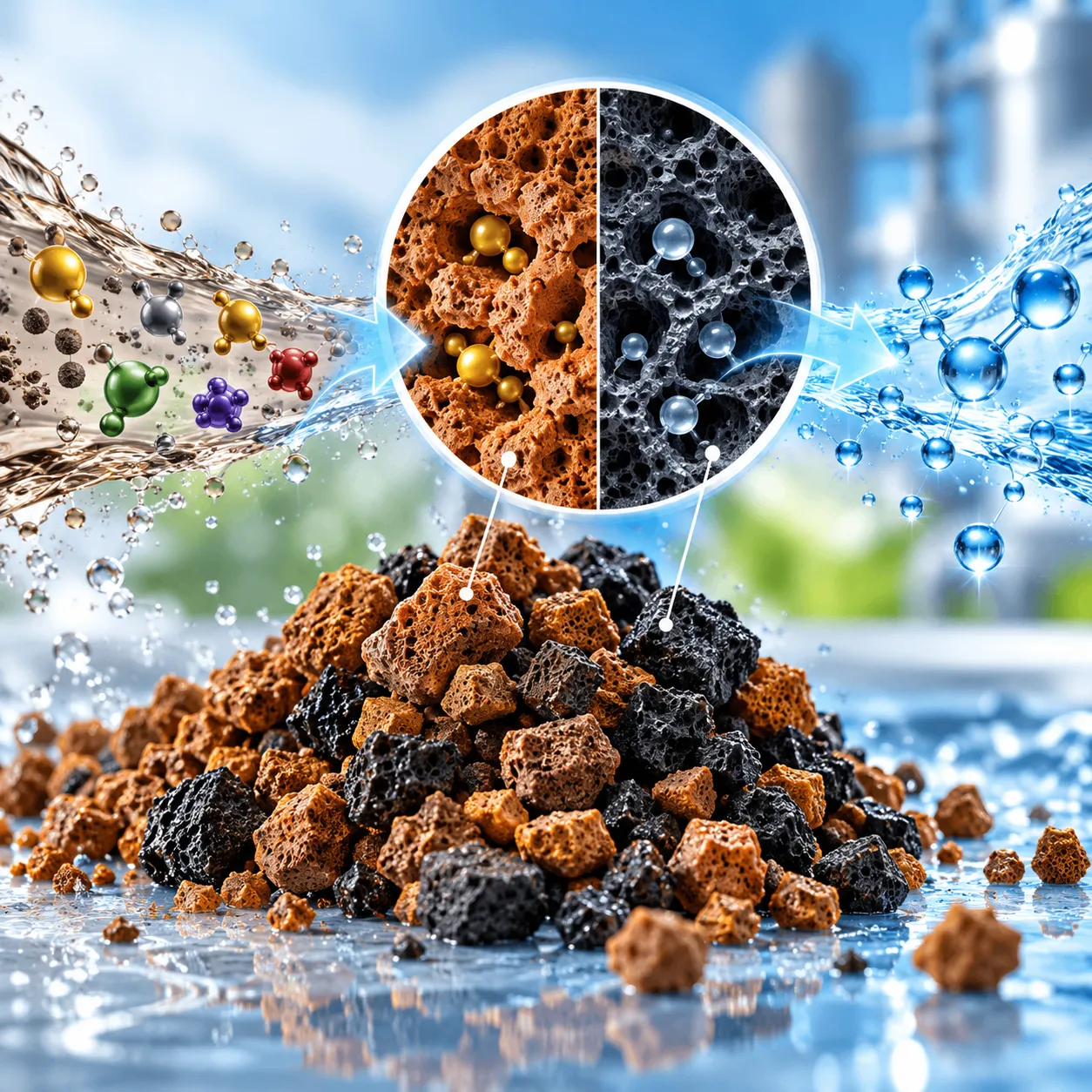
FERROLOX®-X is an engineered hybrid adsorber combining iron oxyhydroxide with a porous carbon phase for the treatment of dissolved metals, metalloids and selected organic contaminants.
FERROLOX®-X is designed to unite the surface reactivity of iron-based adsorption media with the porous structure and organic-affinity characteristics of activated carbon. Its granular structure supports fixed-bed treatment of drinking water, process water, wastewater and water-reuse streams. Surface hydroxyl groups provide pH-dependent binding sites for ionic contaminants, while the carbon fraction provides additional adsorption pathways for selected organic compounds.
Iron-based selectivity / Carbon-powered versatility
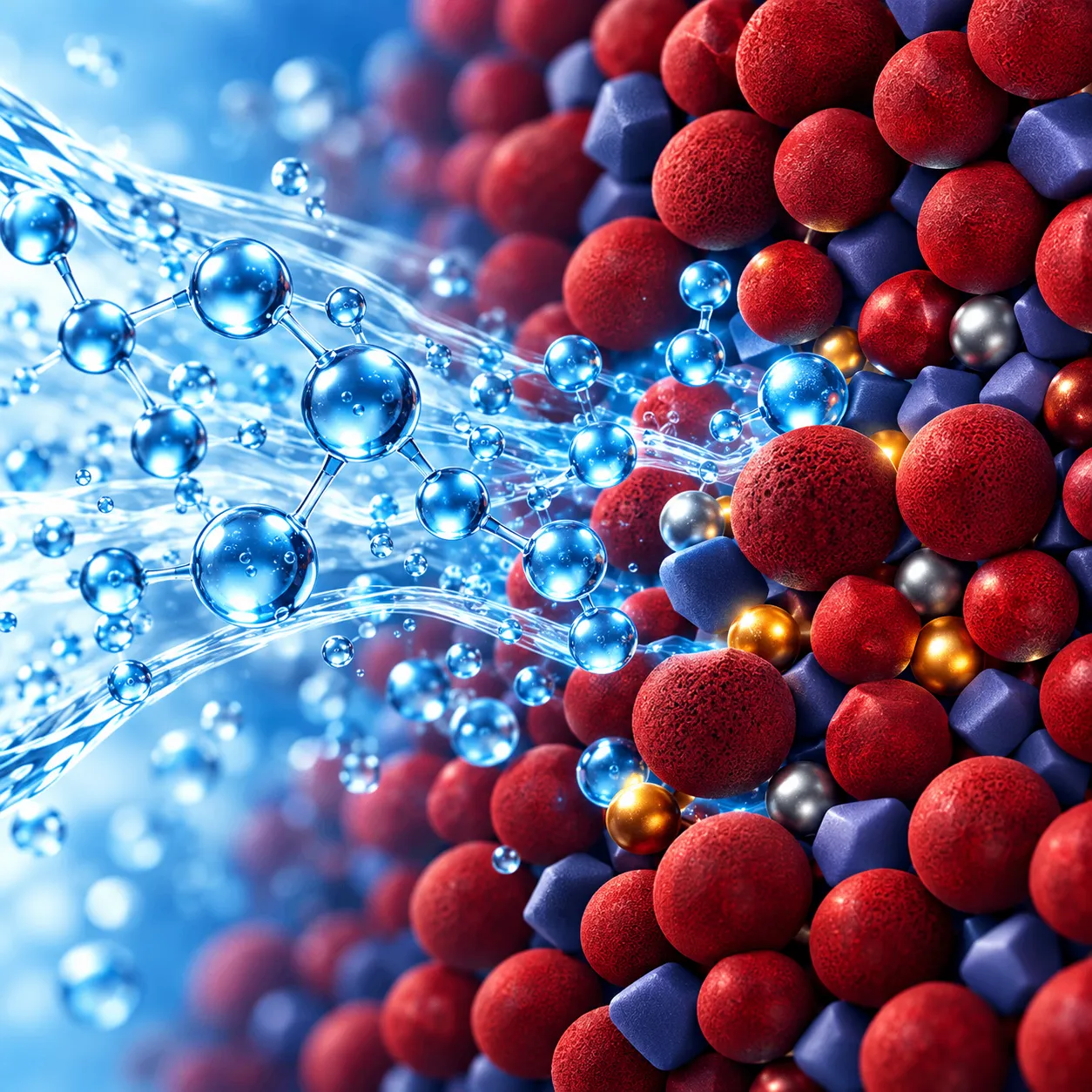
One hybrid media.
Multiple purification objectives.
FERROLOX®-X can be integrated into fixed-bed systems as a primary adsorption stage or final polishing barrier. Treatment performance must be confirmed through feed-water analysis and application-specific testing.
Drinking-Water Polishing
Advanced fixed-bed polishing for potable water supplies and community systems.
Food and Beverage Processing
Pretreatment and purification of ingredient and process water.
Heavy-Metal Removal
Targeted adsorption of dissolved metals and metalloids from industrial streams.
Municipal and Industrial Wastewater
Polishing effluents to meet stringent discharge standards for metals and organics.
Water Reuse and Final Polishing
Advanced filtration and adsorption for reclaimed water and closed-loop cycles.
Agricultural and Irrigation Water
Conditioning water for sensitive agricultural operations and irrigation requirements.
Four adsorption functions engineered into one granule
Iron-based metal and metalloid capture (METAL-CAPTURE™)
Surface hydroxyl groups on the iron oxyhydroxide phase provide reactive sites for selected dissolved metals and metalloids. Performance depends on contaminant species, oxidation state, pH and competing ions.
Porous carbon adsorption (ORGANIC-SORB™)
The carbon fraction provides additional surface area and pore structure for capturing selected dissolved organic compounds. Compound-specific testing is required because organic adsorption varies with molecular size, polarity and concentration.
Accessible macro- and mesopore structure (MACRO-FLOW™)
The brochure describes a pore distribution dominated by macropores and mesopores, supporting contaminant transport from the bulk water into the internal adsorption structure.
pH-responsive surface chemistry (pH-SELECT™)
Protonation and deprotonation alter the charge of surface hydroxyl groups. This influences whether cationic or anionic contaminants are preferentially attracted to the media under specific water conditions.
Iron oxyhydroxide chemistry meets porous carbon
FERROLOX®-X uses multiple adsorption pathways to address contaminants that cannot always be treated efficiently by a single conventional media.
- Hybrid Media Composition – The brochure describes FERROLOX®-X as containing a minimum of 66% iron oxyhydroxide and a minimum of 34% carbon, combining inorganic surface chemistry with carbon adsorption.
- Surface Hydroxyl Chemistry – Iron oxyhydroxide surfaces contain hydroxyl groups that can gain or lose protons depending on pH, changing the electrical character of the surface.
- Multi-Scale Pore Structure – The internal pore distribution is approximately 70% macropores, 20% mesopores and 10% micropores, supporting mass transfer and organic adsorption.
- Fixed-Bed Treatment – The solid granules are intended for downflow fixed-bed operation with sufficient bed depth, service velocity and backwash capability.
Technical Data
Key properties, operating parameters, and specifications for FERROLOX®-X media.
Physical & Operating Properties
| Property | Published Value |
|---|---|
| Product type | Hybrid iron-carbon adsorber |
| Form | Solid granules |
| Color | Reddish black |
| Particle size | 0.5–2.0 mm |
| Bulk density | Approximately 690 kg/m³ |
| Carbon content | Minimum 34% |
| FeOOH content | Minimum 66% |
| Moisture content | 5–10% maximum |
| Specific surface area | Published as 3,000 m²/g (requires verification) |
| Adsorption capacity | Published as 80 g/L by volume (non-specific) |
| Flow direction | Downflow |
| Operating pH | 5–9 |
| Freeboard | 40% |
| Minimum bed depth | 80 cm |
| Preferred bed depth | 120 cm |
| Service velocity | 15–30 m/h |
| Backwash velocity | 25–30 m/h |
Technical Interpretation Note
The published 80 g/L adsorption capacity does not identify a specific contaminant, test concentration, endpoint, or analytical method and should not be used as a guaranteed design capacity. Additionally, the published 3,000 m²/g surface area is unusually high for a media containing at least 66% FeOOH and should be verified through a current BET test.
Download FERROLOX®-X product documents
Explore FERROLOX®-X
adsorption technology


Frequently
Asked Questions
Essential information about FERROLOX®-X selection, operation and performance.
Contact SupportBuild your FERROLOX®-X treatment solution
It starts with contaminant-specific water analysis.
Send us your water-quality data, target contaminants and flow requirements. Our specialists will help evaluate FERROLOX®-X for your application and recommend the necessary treatment configuration.