Three radical pathways / One advanced oxidation platform
OXYONE® is a three-component oxidation formulation designed to establish carbonate-, hydroxyl- and sulfate-radical pathways for treating difficult water and wastewater contaminants.
The technology combines three proprietary compounds with Watch Water® catalyst materials. Depending on the application, OXYONE® may be dosed directly as a powder, prepared as a concentrated solution for automated dosing or activated within a professionally designed advanced oxidation process. The formulation is intended for oxidation of susceptible organic compounds, odour-causing substances, colour, selected micropollutants and microorganisms. Treatment performance and reaction products must be verified for every water matrix.
Carbonate radicals / Hydroxyl radicals / Sulfate radicals
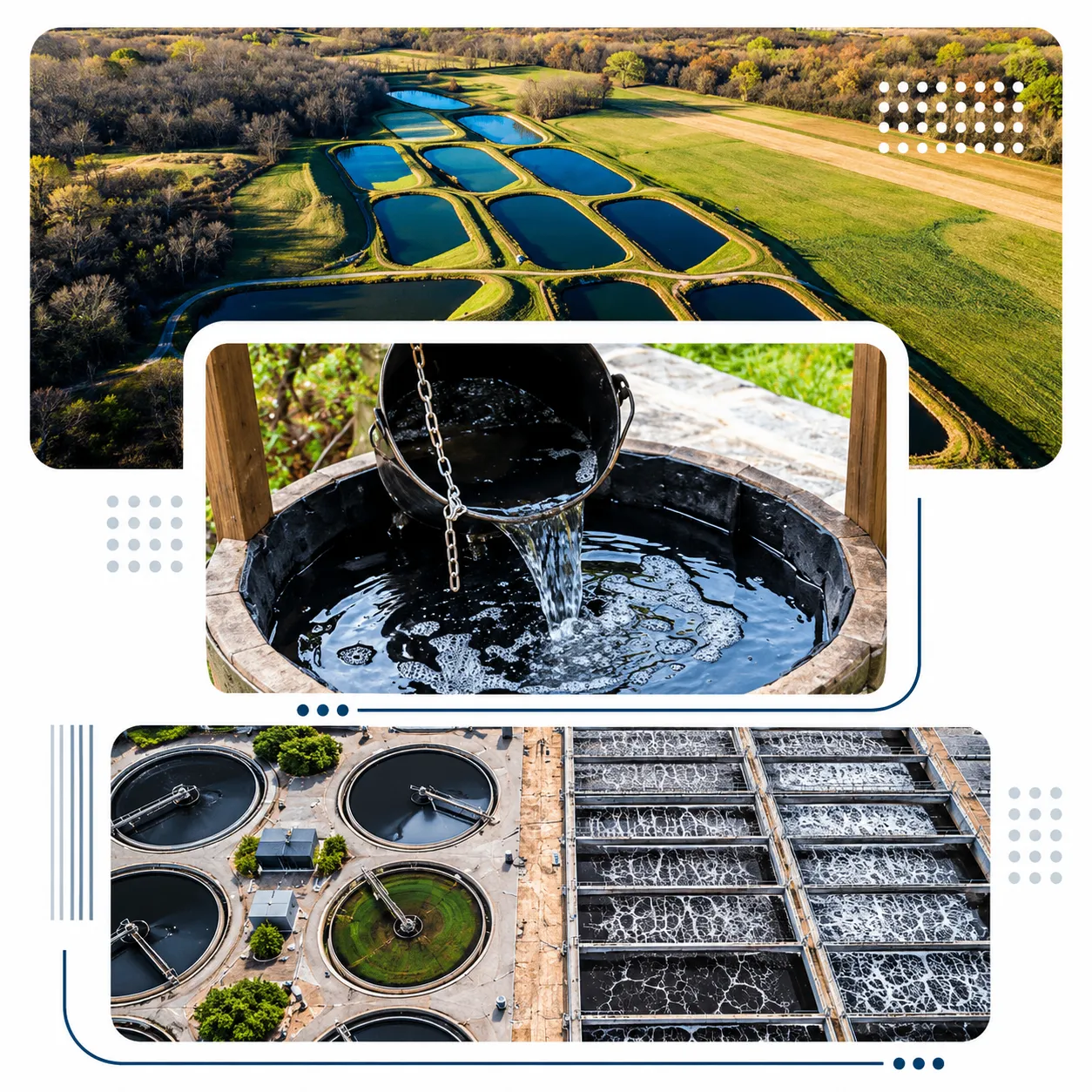
One oxidation platform.
Multiple water-treatment environments.
Developed for decentralized and centralized treatment systems where conventional physical or biological processes cannot independently meet the required objectives.
Industrial Wastewater
Oxidation support for industrial effluent containing colour, odour, COD-forming compounds and persistent organics.
Municipal Wastewater
Advanced treatment or polishing of suitable municipal effluent before discharge or reuse.
Surface-Water Treatment
Evaluation for algae, cyanobacteria, odour, colour and susceptible organic pollution.
Groundwater Remediation
Ex-situ or professionally controlled in-situ oxidation of identified groundwater contaminants.
Lagoon-Water Treatment
Treatment support for wastewater lagoons affected by sulfides, odour and organic loading.
Commercial and Remediation Projects
Configurable oxidation for commercial effluent and contaminated-water remediation.
Three radicals / One catalyst activation platform
Selective Organic Oxidation (CARBONATE-RADICAL)
Carbonate radicals are comparatively selective reactive species that may support oxidation of electron-rich organic pollutants under suitable carbonate and catalyst conditions.
Broad-Spectrum Oxidation (HYDROXYL-RADICAL)
Hydroxyl radicals are highly reactive and relatively non-selective oxidants that attack a broad range of susceptible organic compounds.
Persistent-Pollutant Treatment (SULFATE-RADICAL)
Sulfate-radical chemistry can provide selective oxidation of many organic pollutants, depending on pH, activation conditions and radical scavengers.
Activated Three-Component Chemistry (POROUS-CATALYST)
The brochure describes three proprietary compounds integrated with three porous catalysts and potential microbubble activation for enhanced reaction performance.
Science behind OXYONE®
OXYONE® is positioned as a multi-radical advanced oxidation process. The relative contribution of each radical depends on the actual ingredients, catalyst, pH, alkalinity, dissolved constituents and activation method.
- Catalyst Activation – Proprietary porous catalyst materials activate the three-component formulation and accelerate formation of reactive species.
- Parallel Radical Pathways – Carbonate, hydroxyl and sulfate radicals may coexist, but their concentrations and reaction rates vary according to water chemistry.
- Contaminant Transformation – Radical reactions break chemical bonds, alter contaminant structure and convert target substances into intermediate oxidation products.
- Verification and Polishing – Treated water may require filtration, adsorption, biological treatment, neutralization or residual-oxidant removal before discharge or reuse.
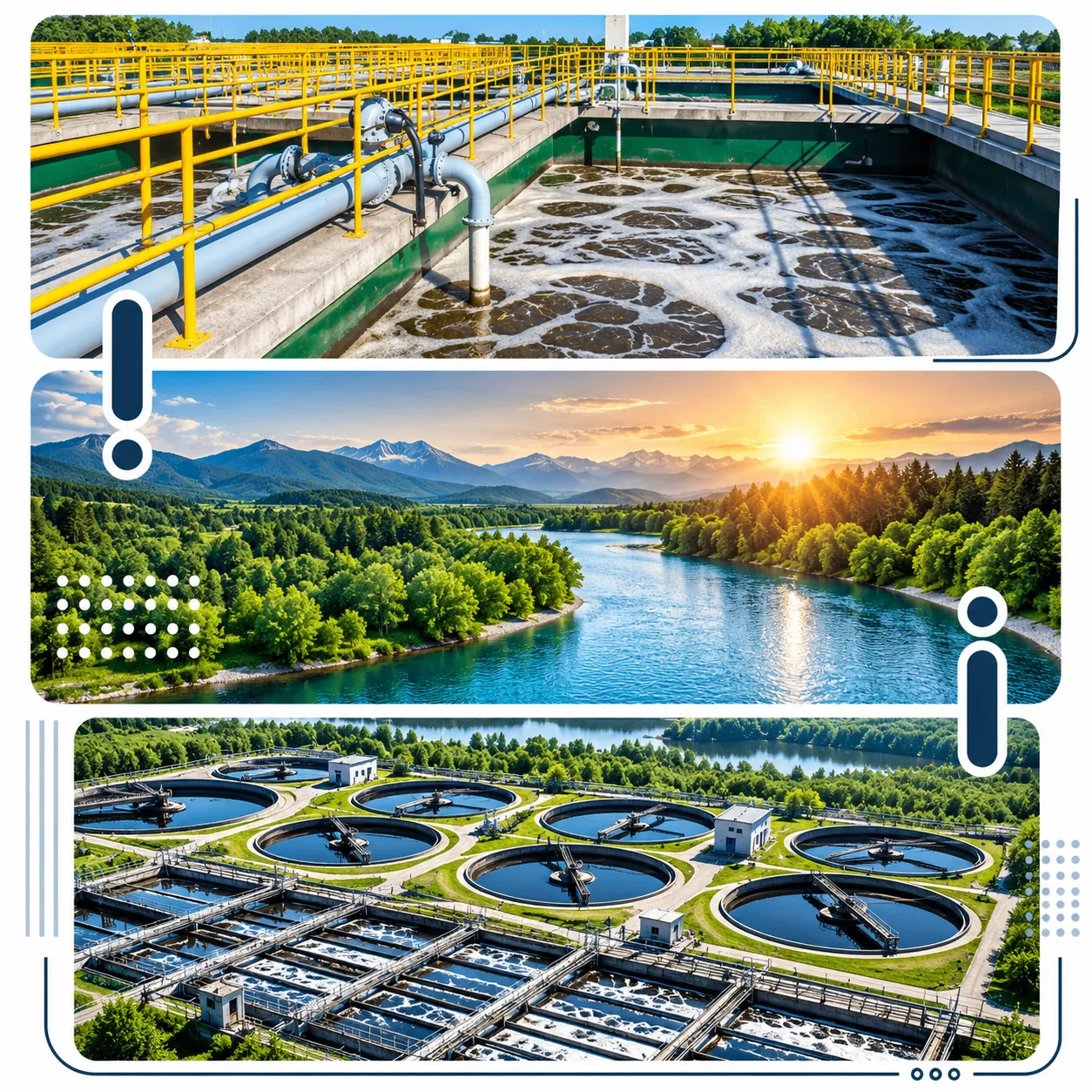
Technical Data & Safety Handling
Published radical notation, redox potentials, application methods, and safety guidelines for OXYONE®.
Published Radical Information & Scientific Notes
| Radical | Brochure Value | Publication Note |
|---|---|---|
| Carbonate radical ($CO_3^{\bullet-}$) | 3.2 V | Requires correction and authoritative scientific support |
| Hydroxyl radical ($\bullet OH$) | 2.7 V | Value varies with the specified redox couple and conditions |
| Sulfate radical ($SO_4^{\bullet-}$) | 3.1 V | Upper end of commonly reported ranges |
| Published total | 9.0 V | Must be removed; separate potentials are not additive |
Published Application Methods
- Direct powder dosing: Applied using calibrated equipment preventing dust exposure.
- Concentrated-solution preparation: Prepared for automated/continuous dosing when permitted by SDS.
- Advanced oxidation activation: Combined with approved catalyst or microbubble activation systems.
Safety & Handling Highlights
- Do not handle without current Safety Data Sheet; restrict to trained professionals.
- Wear chemical-resistant gloves, protective clothing, goggles and respiratory protection for dust.
- Never mix with other chemicals unless compatibility is documented.
- Keep concentrated product out of drains; provide emergency eyewash and safety shower.
Download our latest documents
Explore our OXYONE® poster library


Frequently
Asked Questions
Essential information about OXYONE® chemistry, applications, activation, safety and performance verification.
Contact SupportBuild a three-radical oxidation process
It all starts with contaminant analysis and treatability testing.
Send us your water characterization data, contaminant profile (COD, organics, micropollutants) and treatment objectives. Our specialists will help evaluate OXYONE® for your application.
