Capture carbon / Convert it into a stable mineral resource
CarbonTrapp® is an activated magnesium-oxide bead technology developed for carbon-dioxide capture, water treatment and mineral-resource recovery.
CarbonTrapp® uses high-purity, activated magnesium oxide manufactured from calcined magnesium carbonate. Its porous alkaline surface reacts with carbon dioxide to form magnesium-carbonate and bicarbonate species. In water or wastewater applications, the beads can neutralise acidity while capturing dissolved CO₂ and releasing magnesium. The technology may also be integrated with ammonia- and nutrient-rich wastewater, but any production of fertiliser-grade material requires controlled reaction conditions, purification, product analysis and regulatory approval.
Capture CO₂ / Mineralise carbon / Recover magnesium value
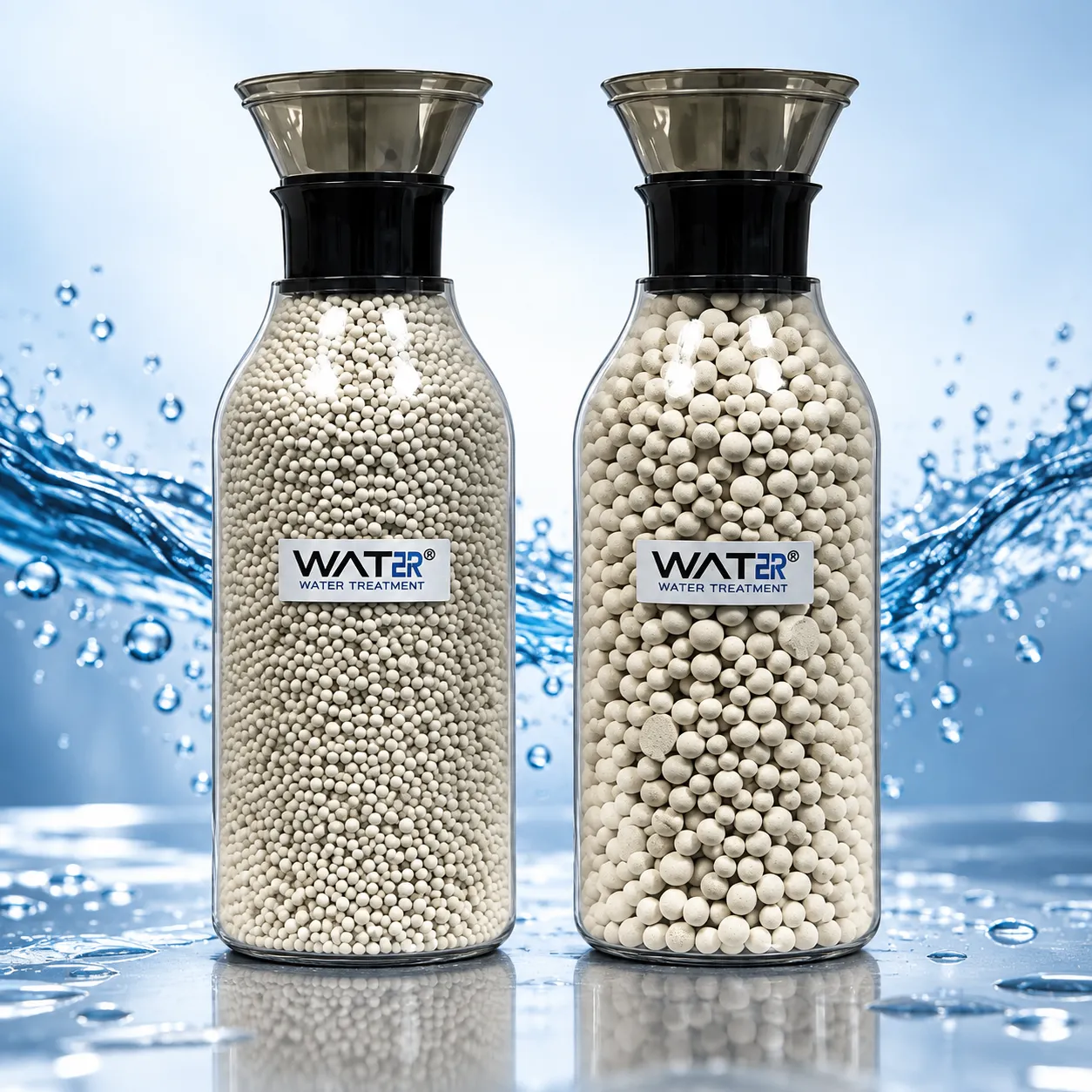
Activated MgO for carbon, water and resource-recovery applications
CarbonTrapp® can be evaluated for gas–liquid carbon capture, mineral carbonation and treatment of acidic or ammonia-containing wastewater.
Industrial CO₂ Capture
Uses reactive magnesium-oxide surfaces to capture carbon dioxide from compatible industrial gas streams.
Flue-Gas Mineralisation
Converts captured CO₂ into magnesium-carbonate phases under controlled temperature, moisture and gas-contact conditions.
Dissolved CO₂ Treatment
Neutralises carbonic acidity and captures dissolved carbon dioxide in water and selected wastewater streams.
Ammonia-Rich Wastewater
Can be investigated as part of a controlled process combining carbon dioxide, ammonia and magnesium chemistry.
Nutrient-Recovery Systems
Supplies magnesium and alkalinity for selected nutrient-precipitation or fertiliser-feedstock recovery processes.
Acidic Water & Wastewater
Neutralises acidity while contributing magnesium and carbonate alkalinity to the treated water.
Four mechanisms / Working through one activated mineral platform
Reactive Carbon-Dioxide Contact (CO₂-CAPTURE)
Porous magnesium-oxide beads provide alkaline reactive surfaces for capturing gaseous or dissolved CO₂.
Convert Carbon into Mineral Phases (MINERALISATION)
Captured carbon can form magnesium-carbonate or bicarbonate species depending on pH, pressure, temperature and moisture.
Neutralise Carbonic and Other Acids (pH-CONDITIONING)
Magnesium oxide consumes acidity and contributes alkalinity, improving the treatment conditions of acidic water.
Magnesium and Nutrient Integration (RESOURCE-RECOVERY)
Dissolved magnesium may be incorporated into controlled nutrient-recovery processes or converted into a characterised mineral product.
Science & Technology
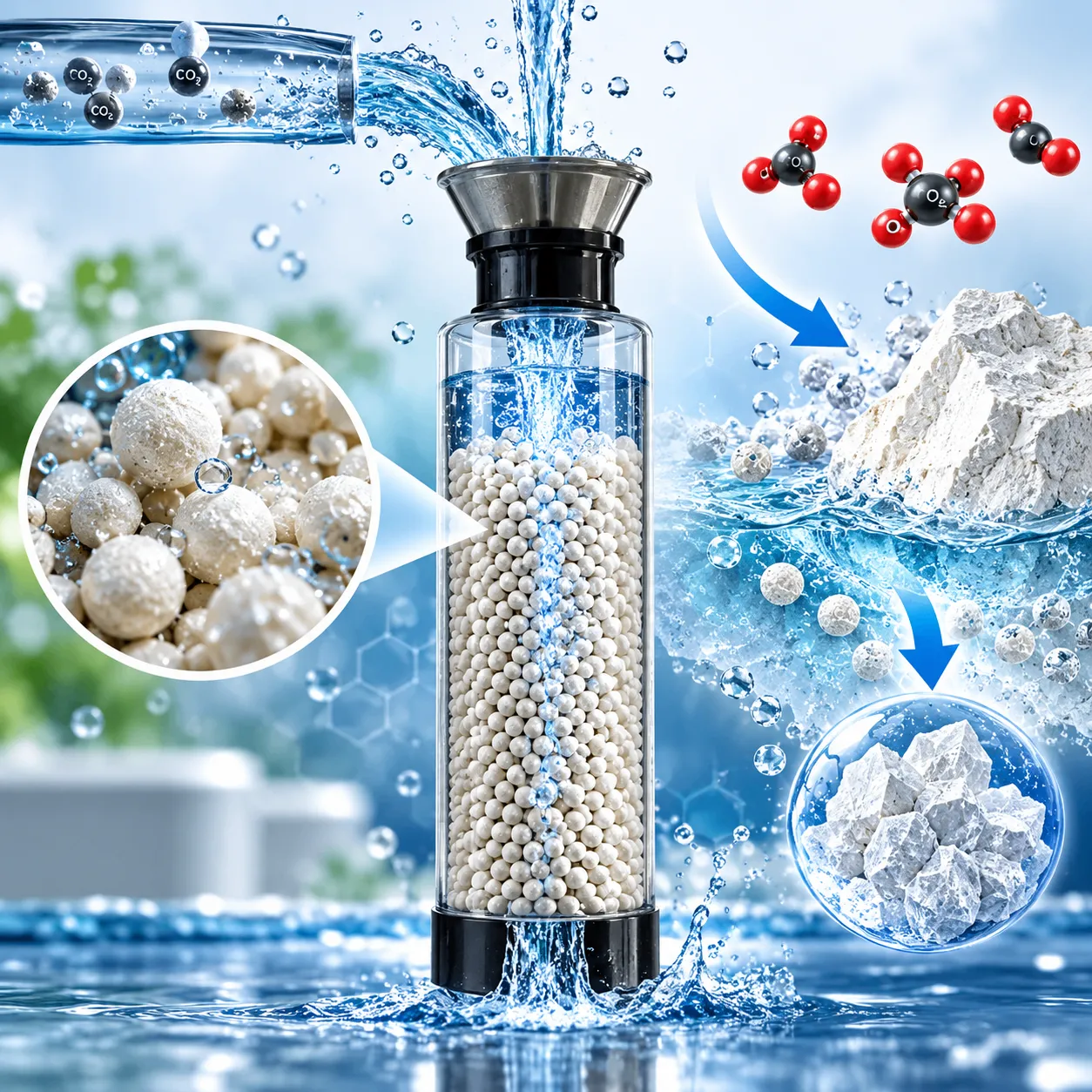
CarbonTrapp® uses magnesium-oxide hydration, acid neutralisation and mineral carbonation to capture and stabilise carbon dioxide.
- Magnesium-Oxide Hydration – In water, magnesium oxide hydrates to magnesium hydroxide ($MgO + H_2O \rightarrow Mg(OH)_2$), depending on calcination history, structure and temperature.
- Direct Mineral Carbonation – Reacts with carbon dioxide to form magnesium carbonate ($MgO + CO_2 \rightarrow MgCO_3$), requiring controlled moisture, pressure and contact.
- Aqueous Carbon Capture – In water, magnesium hydroxide neutralizes carbon dioxide ($Mg(OH)_2 + CO_2 \rightarrow MgCO_3 + H_2O$), forming soluble bicarbonate species at higher CO₂ levels.
- Ammonia and Carbon-Dioxide Chemistry – Ammonia and CO₂ in water form ammonium bicarbonate or carbamate intermediates (they do not automatically form urea under ordinary water treatment).
Explore the CarbonTrapp®
Poster Library


Frequently
Asked Questions
Technical information about CarbonTrapp® carbon capture, magnesium chemistry, wastewater integration and product recovery.
Contact SupportGet a mineral carbon-capture solution
It all starts with gas, water and carbon-balance analysis.
Send us your gas stream composition (CO₂, moisture, temperature, flow rates) and carbon capture objectives. Our specialists will help evaluate CarbonTrapp® for your industrial application.