Transform wastewater lagoons with powerful radical oxidation
LagoonOxy® is a proprietary powder-based advanced oxidation treatment developed for municipal, industrial, agricultural and polishing lagoons.
LagoonOxy® combines a powerful oxidizing component with catalytic Red Iron-Organic Framework technology. When activated in water, the system is designed to generate highly reactive oxygen species, including hydroxyl and sulfate radicals. These reactive species attack difficult organic pollutants, detergents, colour-causing compounds and odorous contaminants. LagoonOxy® can be distributed across the lagoon surface without installing a complex treatment plant, making it suitable for improving existing lagoon performance. Dosage and application frequency must be determined from lagoon volume, water quality, contaminant loading, temperature and validated treatment trials.
Powerful radical chemistry / Simple surface application
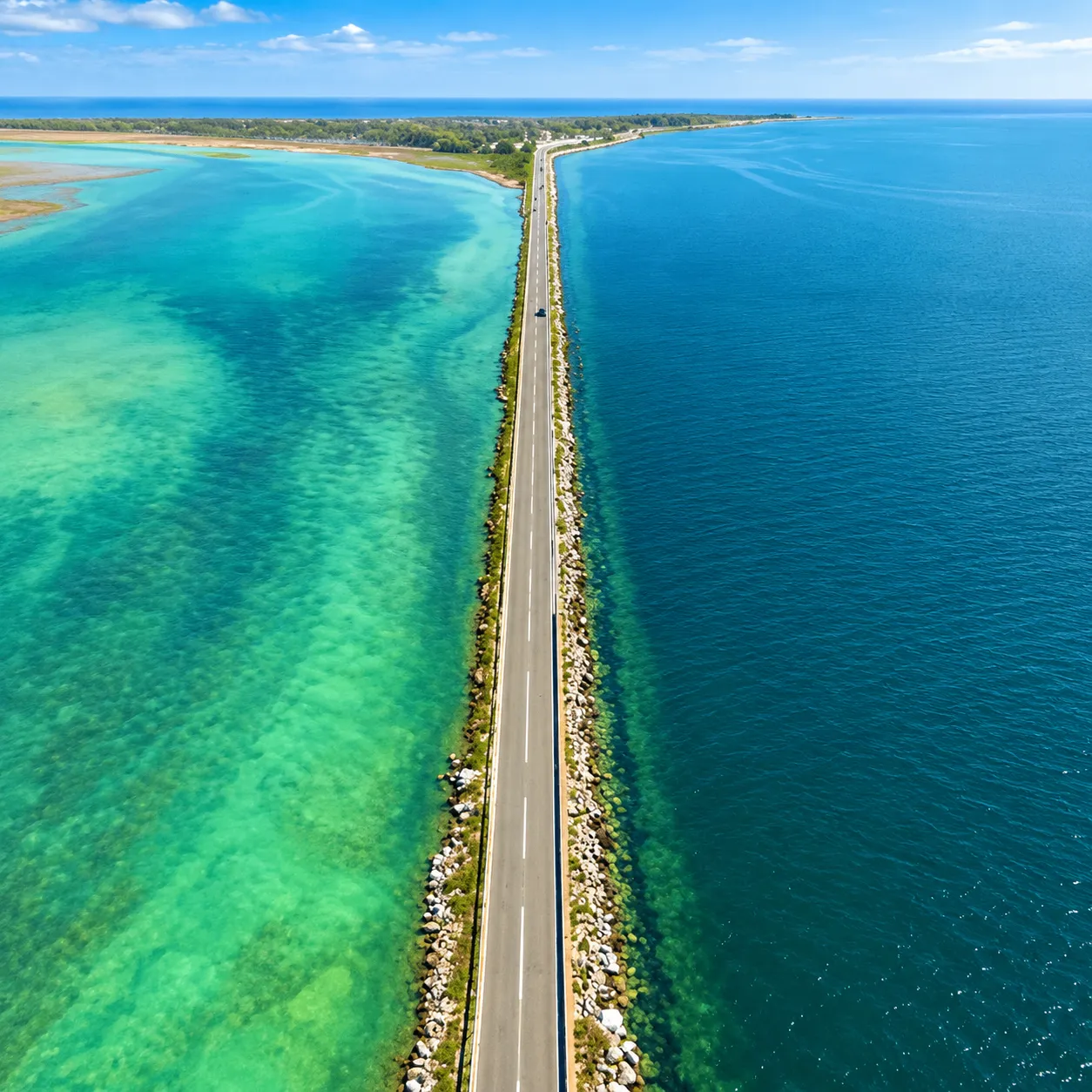
One oxidation technology.
Multiple lagoon applications.
LagoonOxy® can be incorporated into different wastewater-lagoon configurations as an initial treatment, performance-enhancement step or final polishing process.
Municipal Wastewater Lagoons
Supports the treatment of domestic wastewater by targeting organic loading, odorous compounds, colour and selected residual contaminants.
Industrial Wastewater Lagoons
Designed for wastewater containing difficult organic pollutants from food processing, textiles, pulp and paper, and other industrial operations.
Agricultural & Livestock Lagoons
Supports odour management and the treatment of organic-rich wastewater generated by livestock and agricultural activities.
Polishing Lagoons
Provides an additional oxidation stage for reducing residual contaminants before discharge or permitted reuse.
Colour, Dye & Surfactant Treatment
Oxidises selected dyes, pigments, detergents, surfactants and other compounds that contribute to colour and pollution.
Odour & Sulphide Control
Targets hydrogen sulphide and other oxidisable odour-causing compounds in wastewater lagoons.
Four treatment functions / Working through one advanced oxidation platform
Powerful Oxidizer Activation (OXY-ACTIVATION)
The oxidizing component activates after contact with water, initiating reactions capable of generating highly reactive oxygen species.
Red Iron-Organic Framework Catalyst (FeOF-CATALYSIS)
The high-surface-area catalyst is designed to increase contact between oxidizing agents and pollutants while accelerating radical generation.
Hydroxyl and Sulfate Radical Chemistry (RADICAL-OXIDATION)
Reactive radicals attack the molecular structures of susceptible organic pollutants, odorous compounds and industrial contaminants.
Water-Quality Improvement (LAGOON-POLISHING)
Controlled treatment can support reductions in colour, odour and oxidisable organic loading while improving the quality of lagoon effluent.
Science & Technology
LagoonOxy® combines an oxidizing agent with catalytic Iron-Organic Framework technology to promote the formation of reactive oxygen species directly within lagoon water.
- Oxidizer Activation – When LagoonOxy® contacts water, its oxidizing component begins releasing active oxidizing species (activation rate depends on water chemistry, temperature, pollutant loading and mixing).
- Catalytic FeOF Surface – The Red Iron-Organic Framework catalyst features a porous, high-surface-area structure designed to improve contact between oxidizer and contaminants.
- Hydroxyl and Sulfate Radicals – The activated system generates hydroxyl ($\bullet OH$) and sulfate ($SO_4^{\bullet-}$) radicals that react rapidly with susceptible organic molecules.
- Pollutant Transformation – Radical oxidation fragments complex organic contaminants into smaller compounds and, depending on conditions, into carbon dioxide, water and inorganic ions.
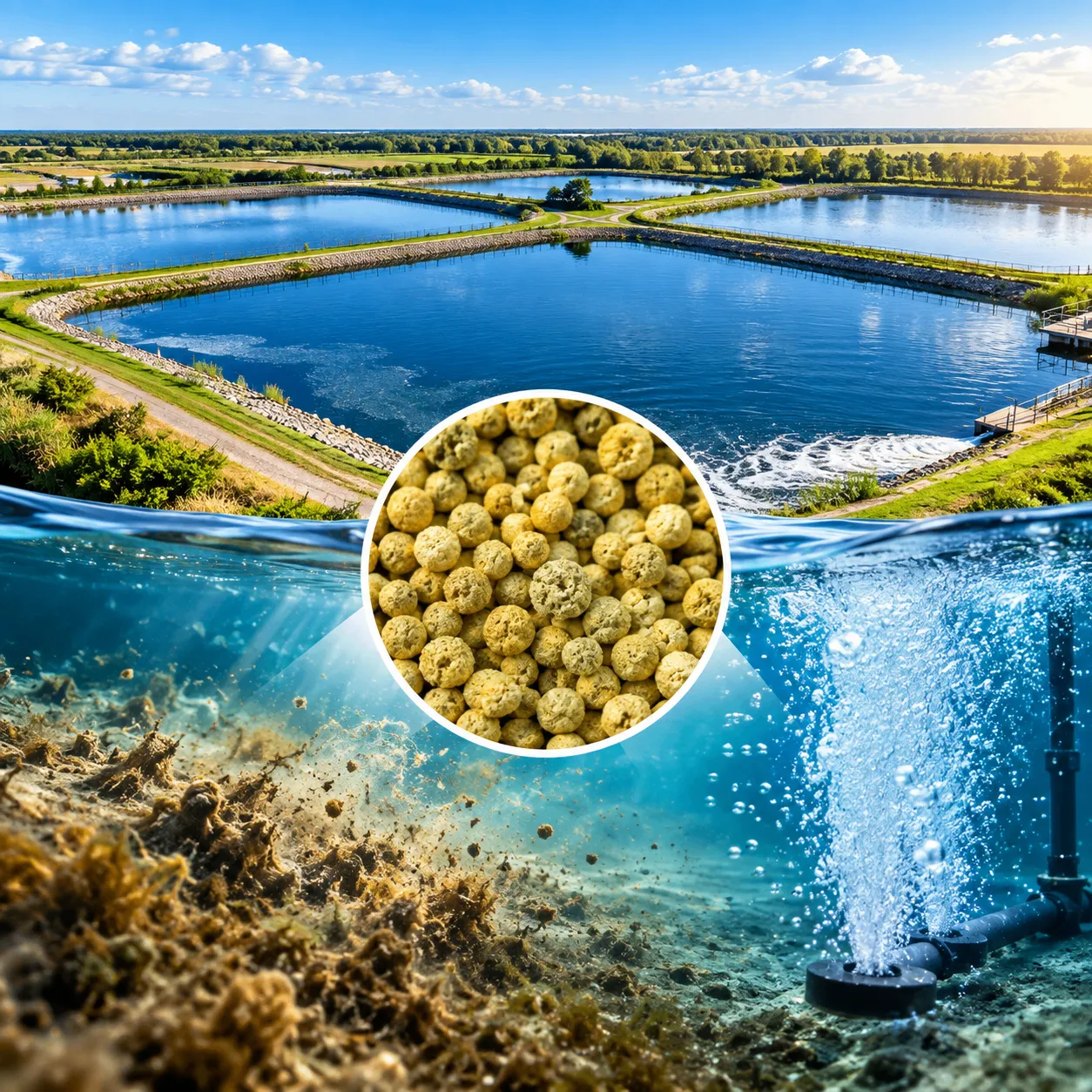
Published Technical Data
Physical form, dosage guidelines, temperature operating range, and packaging configurations for LagoonOxy®.
Published Technical Specification
| Parameter | Brochure Information |
|---|---|
| Physical form & Colour | Powder / White, off-white or reddish-white |
| Solubility & Particle description | Completely soluble in water | Red spherical beads combined with fine powder |
| Recommended starting dosage | 30 g/m³ (maintenance/mild) to 50 g/m³ (initial/heavy contamination) |
| Operating temperature guidance | Preferred: 20–35°C | Below 15°C: slower reactions | Above 35°C: evaporation/stress |
| Standard packaging & Pallet | 60 kg drum (18 drums per pallet = 1,160 kg gross weight) | Options for 6, 9, or 12 drums |
Explore the LagoonOxy®
Poster Library


Frequently
Asked Questions
Important information about LagoonOxy® chemistry, applications, dosing, monitoring and safe handling.
Contact SupportGet an advanced lagoon treatment solution
It all starts with lagoon analysis.
Send us your lagoon volume, surface area, water quality data (COD, BOD, odour, sulphides) and treatment objectives. Our specialists will help evaluate LagoonOxy® for your facility.
