Targeted contaminant adsorption / In a high-capacity quick-change filter
MY TITAN FILTER® is a point-of-use cartridge system containing Micro Titan adsorptive media for treatment of selected dissolved inorganic contaminants.
Designed primarily for under-counter residential installation, the system uses a high-capacity adsorbent to reduce specifically validated contaminants while generally retaining naturally occurring calcium and magnesium. The quick-change cartridge design simplifies replacement and operates without electricity or a reverse-osmosis concentrate stream. Cartridge selection and replacement must be based on the target contaminant, its chemical species, influent concentration, water chemistry and certified capacity.
Targeted adsorption / Mineral retention / Quick cartridge replacement
One adsorption platform.
Multiple point-of-use treatment objectives.
MY TITAN FILTER® is intended for water sources with identified contaminants. A laboratory water analysis is required before selecting the cartridge or making drinking-water safety claims.
Under-Counter Drinking Water
Point-of-use treatment for specifically tested dissolved contaminants.
Cooking-Water Treatment
Treated water for cooking and food preparation from a dedicated tap.
Arsenic Treatment
Adsorption of validated arsenic species under defined pH and water-chemistry conditions.
Selected Heavy Metals
Treatment of individually validated metals such as lead, cadmium, chromium or mercury.
Radionuclide Polishing
Specialized treatment for named radionuclides only when supported by product-specific performance data.
Residential Water Polishing
Final-stage treatment after suitable sediment and interfering-contaminant pretreatment.
Four treatment capabilities engineered into one POU platform
Selective Inorganic Adsorption (MICRO-TITAN™)
Micro Titan media provides active surface sites intended to bind selected metal and inorganic contaminants from water.
High-Capacity Cartridge Design (HIGH-CAP TS™)
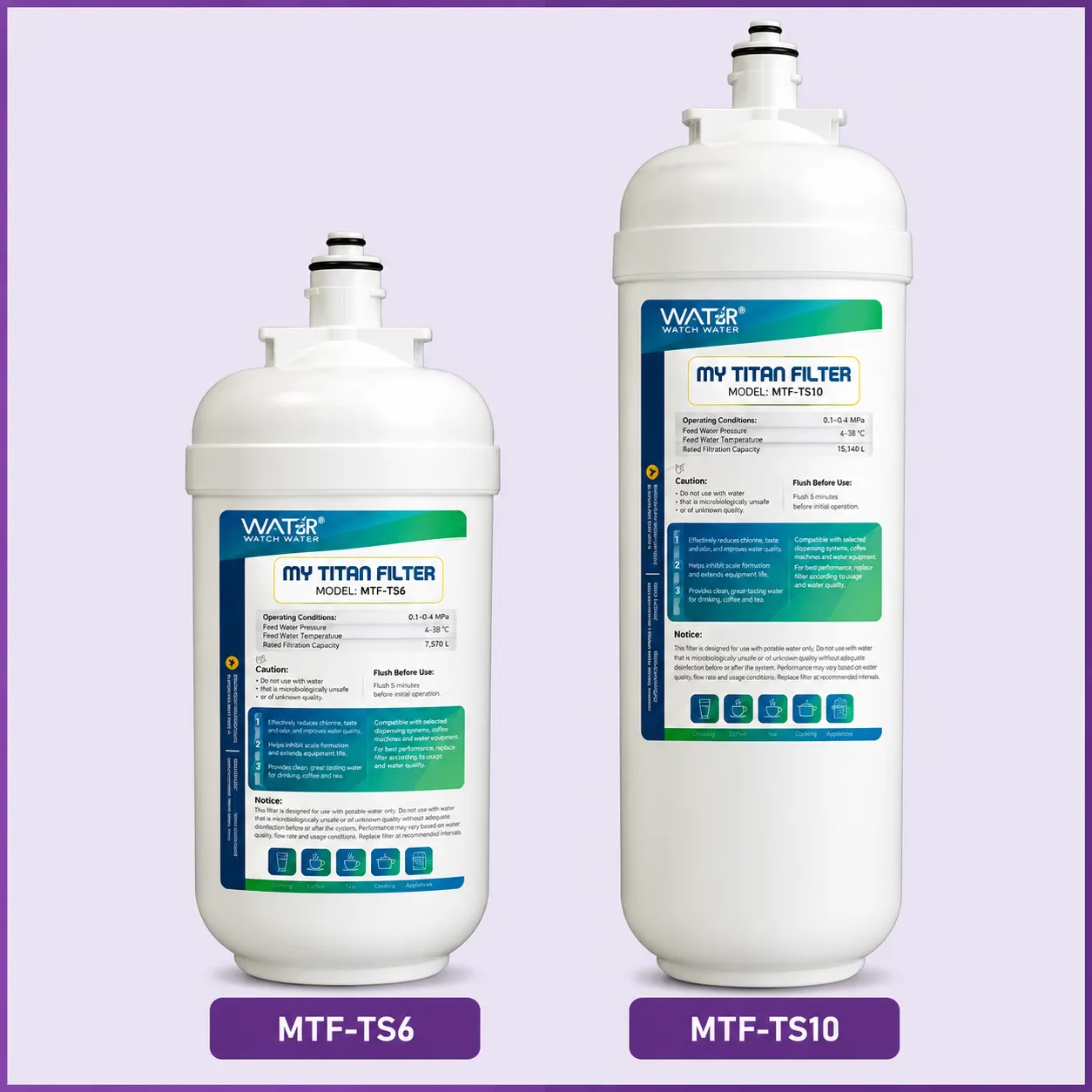
MTF-TS6 and MTF-TS10 cartridges provide different media volumes for extended point-of-use operation under validated loading conditions.
Simplified Filter Replacement (QUICK-CHANGE™)
The integrated quick-change connection is designed to simplify cartridge removal and replacement while reducing direct contact with spent media.
General Mineral Retention (MINERAL-KEEP™)
Because the system is based on selective adsorption rather than membrane desalination, naturally occurring calcium and magnesium are generally retained.
MY TITAN FILTER® Models
Compare cartridge sizing, published flow rates, service intervals, and capacity ratings for MTF-TS6 and MTF-TS10.
Model Specifications & Comparison
| Model | Published Size | Published Flow Rate | Service Interval |
|---|---|---|---|
| MTF-TS6 | 22 in | 2.5 gpm (~9.5 L/min) | Up to 18 months |
| MTF-TS10 | 26 in | 2.5 gpm (~9.5 L/min) | Up to 18 months |
Capacity & Performance Claims
- Rated volume: 10,000 US gal (~37,854 L)
- Arsenic test concentration mentioned: 100 µg/L or ppb
- Replacement condition: 18 months or rated volume (whichever comes first)
- Utilities required: Electricity and concentrate wastewater streams are not required during normal filtration.
Science & Technology
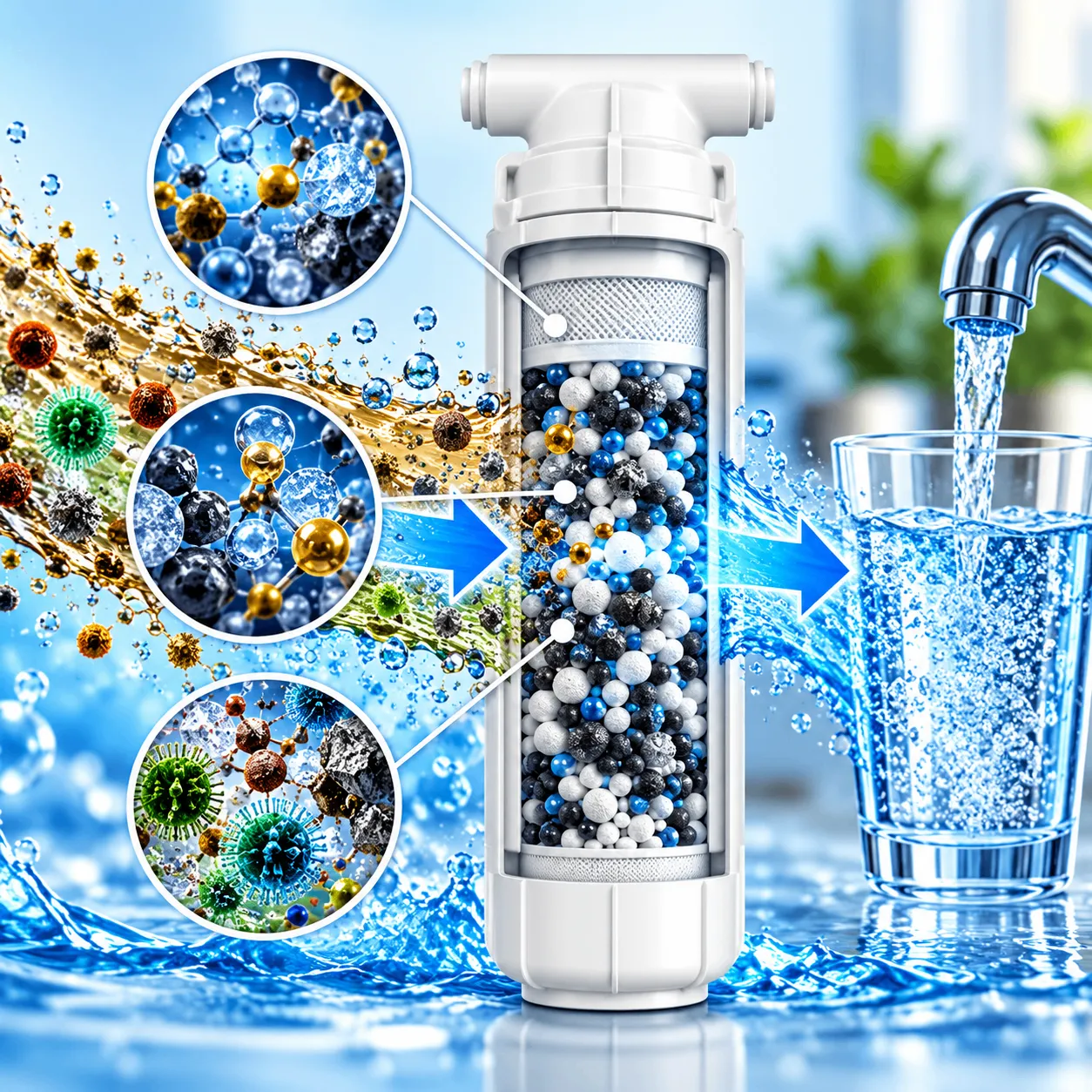
MY TITAN FILTER® relies on surface adsorption. Performance depends strongly on contaminant speciation, pH, competing ions, contact time and the available capacity of the Micro Titan media.
- Surface Binding – Dissolved target ions interact with active sites on the adsorbent surface and are retained through physicochemical binding mechanisms.
- Contaminant Speciation – Elements can exist in different chemical forms (e.g., arsenite vs. arsenate), so performance cannot be defined by total contaminant concentration alone.
- Competitive Adsorption – Phosphate, silicate, sulfate, natural organic matter and other dissolved constituents may compete with target contaminants and reduce effective cartridge capacity.
- Breakthrough-Controlled Replacement – The cartridge must be replaced before contaminant breakthrough based on defined influent concentration, flow rate and treated-water limits.
Explore Our MY TITAN FILTER®
Poster Library


Frequently
Asked Questions
Important information about MY TITAN FILTER® applications, capacity, performance and safe cartridge replacement.
Contact SupportGet a targeted point-of-use treatment solution
It all starts with a complete laboratory water analysis.
Send us your water analysis, target contaminants (arsenic, heavy metals, radionuclides), pH and flow requirements. Our specialists will help evaluate MY TITAN FILTER® (MTF-TS6 and MTF-TS10) for your point-of-use application.
