Raise treatment performance / Not system complexity
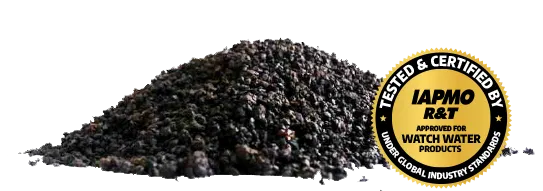
KATALYST-LIGHT PLUS is a granulated catalytic filtration medium developed for simultaneous iron, manganese and hydrogen sulfide reduction in groundwater.
KATALYST-LIGHT PLUS combines approximately 82% magnesium oxide with 15% manganese dioxide in uniform granules. Unlike media that use only a thin manganese dioxide surface coating, its active components are incorporated throughout the granular structure. The magnesium oxide component supports pH correction by reacting with acidity and dissolved carbon dioxide, while manganese dioxide provides a catalytic surface for oxidizing dissolved iron, manganese and hydrogen sulfide. The resulting insoluble compounds are retained in the fixed filter bed and discharged during backwashing. KATALYST-LIGHT PLUS is intended for downflow fixed-bed systems serving residential, commercial, industrial and municipal groundwater applications. Depending on water chemistry, it may also support iron-assisted reduction of arsenic, phosphate, chromium, copper, radium, uranium and selected radionuclides.
Two active minerals / One integrated treatment process
One media.
Multiple groundwater challenges.
KATALYST-LIGHT PLUS is designed for fixed-bed filtration systems where pH support, catalytic oxidation and solids filtration are required in a single treatment stage.
Iron and Manganese Reduction
Simultaneous catalytic oxidation and filtration of dissolved iron and manganese.
Hydrogen Sulfide and Odor Control
Treatment of H₂S associated with rotten-egg odor and water-system corrosion.
Low-pH Groundwater Treatment
Magnesium oxide supports pH adjustment and improved manganese oxidation.
Arsenic and Heavy-Metal Reduction
Supports iron-assisted co-precipitation and filtration of arsenic and selected metals.
Municipal Groundwater Treatment
Fixed-bed filtration for municipal and community groundwater systems.
Industrial and Commercial Water Treatment
Pretreatment of process water containing metals, H₂S and acidity.
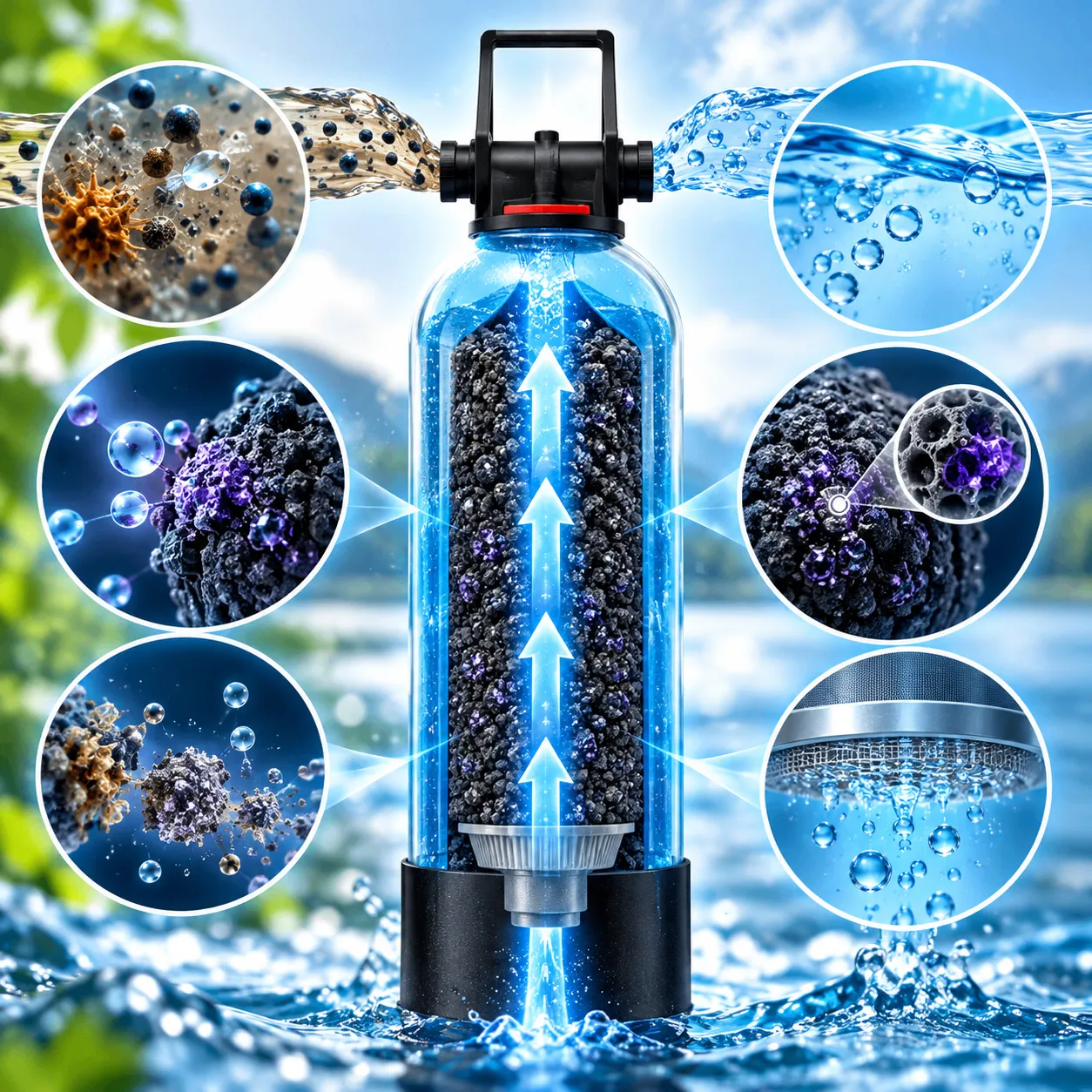
Four treatment mechanisms working inside one media
Magnesium-based pH support
The high magnesium oxide content reacts with acidity and dissolved carbon dioxide, helping raise the pH into a range more favorable for iron and manganese oxidation.
Catalytic oxidation
Manganese dioxide provides catalytic sites that support the transformation of dissolved Fe²⁺, Mn²⁺ and H₂S into oxidized or precipitated compounds.
Precipitation and contaminant capture
Oxidized iron forms ferric oxyhydroxide particles that can co-precipitate arsenic, phosphate and selected metals before being retained inside the media bed.
Uniform fixed-bed filtration
Uniform 0.6–1.4 mm granules provide consistent hydraulic flow, solids retention and comparatively controlled pressure-drop development.
Catalytic oxidation combined with pH correction
Manganese reduction is generally more pH-dependent than iron reduction. KATALYST-LIGHT PLUS combines magnesium oxide and manganese dioxide so the media can support both water-conditioning and catalytic filtration functions.
- Integrated Mineral Composition – MgO, MnO₂ and CaO are formed into uniform granules instead of applying only a thin catalytic coating to sand.
- pH-Supported Oxidation – Magnesium oxide reacts with acidity and dissolved carbon dioxide, helping create conditions favorable for manganese oxidation.
- Catalytic Metal Conversion – Dissolved iron and manganese are transformed into insoluble oxidized compounds that can be retained in the filter bed.
- Iron-Assisted Co-Precipitation – Freshly formed ferric oxyhydroxide can provide adsorption and co-precipitation sites for arsenic, phosphate and selected metals.
Download our latest KATALYST-LIGHT PLUS documents
Explore the KATALYST-LIGHT PLUS
poster library


Frequently
Asked Questions
Learn about KATALYST-LIGHT PLUS composition, pH correction, contaminant treatment, oxidation and system operation.
Contact SupportGet an advanced groundwater solution
It all starts with a complete water analysis.
Send us your iron, manganese, hydrogen sulfide, pH, alkalinity, dissolved carbon dioxide, ORP, arsenic and flow-rate data. Our specialists will help determine the correct media quantity, vessel size, oxidant requirement and backwash conditions.