Capture finer solids / Protect critical water systems
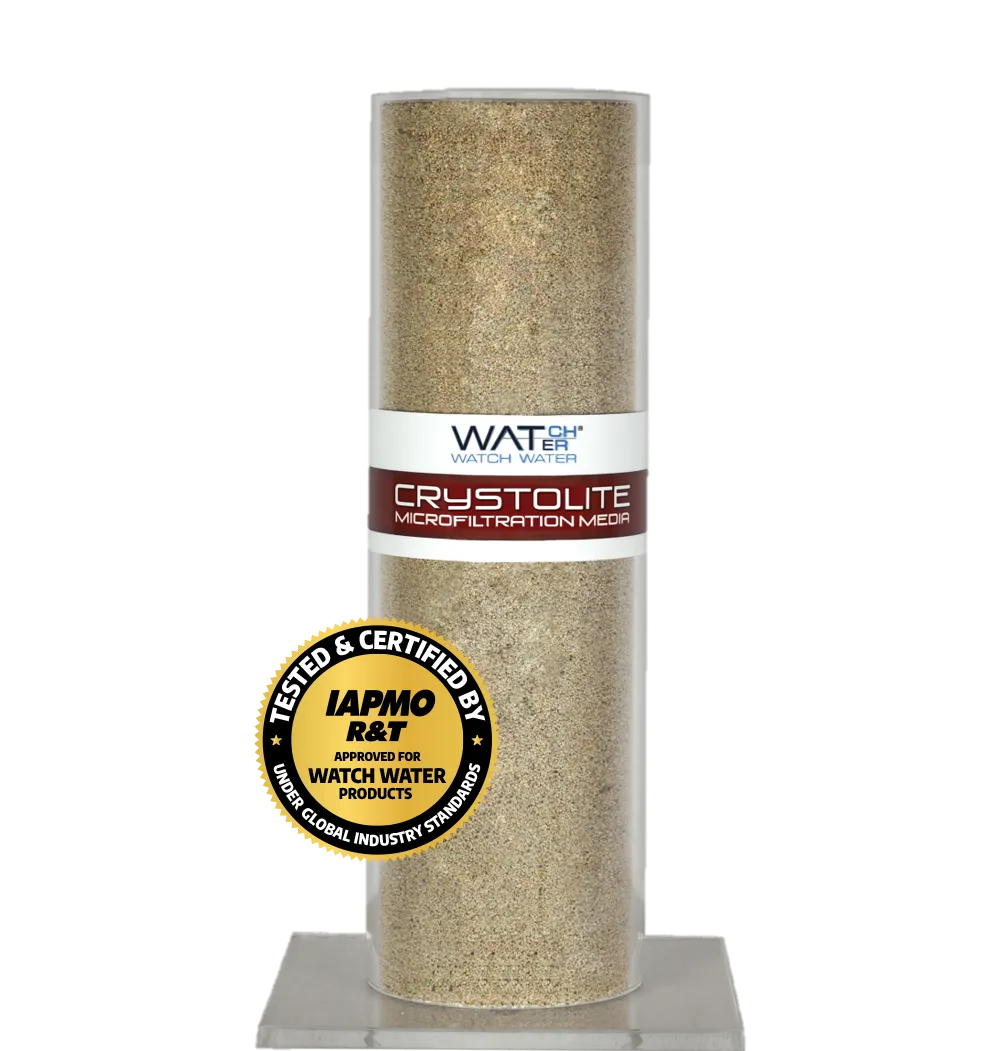
CRYSTOLITE™ is a robust, backwashable granular filtration medium developed for fine suspended-solids removal, turbidity control and Silt Density Index reduction.
CRYSTOLITE™ Micro Filtration Media is designed for residential, commercial, municipal and industrial water-treatment systems requiring finer filtration than conventional sand or multimedia can typically provide. Its high-surface-area crystalline granules capture suspended particles at and within the upper region of the filter bed. The accumulated solids are released during a short manual or automatic backwash cycle, allowing the media to be reused over an extended operating life. CRYSTOLITE™ can reduce dependence on disposable cartridge filters and help protect reverse osmosis, ultrafiltration, cooling, boiler and industrial process-water systems. Depending on water chemistry, it may also adsorb ammonium and selected dissolved metals.
Reusable filtration / Reduced cartridge waste
One filtration media.
Multiple process-water applications.
CRYSTOLITE™ can be installed in downflow or upflow pressure vessels with manual or automatic backwashing. Final system design must account for influent solids, particle-size distribution, SDI, water chemistry, service flow and available backwash capacity.
RO and UF Pretreatment
Fine-solids and SDI reduction before reverse osmosis and ultrafiltration membranes.
High-Solids Wastewater
Backwashable filtration of suspended solids following clarification or precipitation.
Cooling-Tower and Boiler Water
Removal of suspended matter from makeup, recirculation and blowdown-recovery streams.
Power Stations and Heavy Industry
Filtration for power generation, steel mills, metal processing and industrial utilities.
Plating and Printed-Circuit Processes
Treatment of process water containing suspended particles and selected trace metals.
Municipal and Water-Reuse Systems
Fine filtration and polishing before reuse, discharge or advanced treatment.
Four filtration functions engineered into one media
Fine-particle capture
The high-surface-area granular bed captures fine suspended solids, turbidity and SDI-forming particles. Performance depends on particle distribution, bed depth, coagulation and service velocity.
Surface-dominant solids retention
A significant portion of suspended material is retained near the upper media surface, supporting easier release during backwashing and helping limit deep-bed fouling.
Compact high-rate filtration
CRYSTOLITE™ supports published service velocities of 15–30 m/h, enabling compact pressure-vessel systems and parallel treatment trains for larger flows.
Reusable backwash technology
Accumulated solids are released through short backwash and rinse cycles, reducing dependence on disposable cartridges and plastic filter housings.
High-surface-area crystalline filtration technology
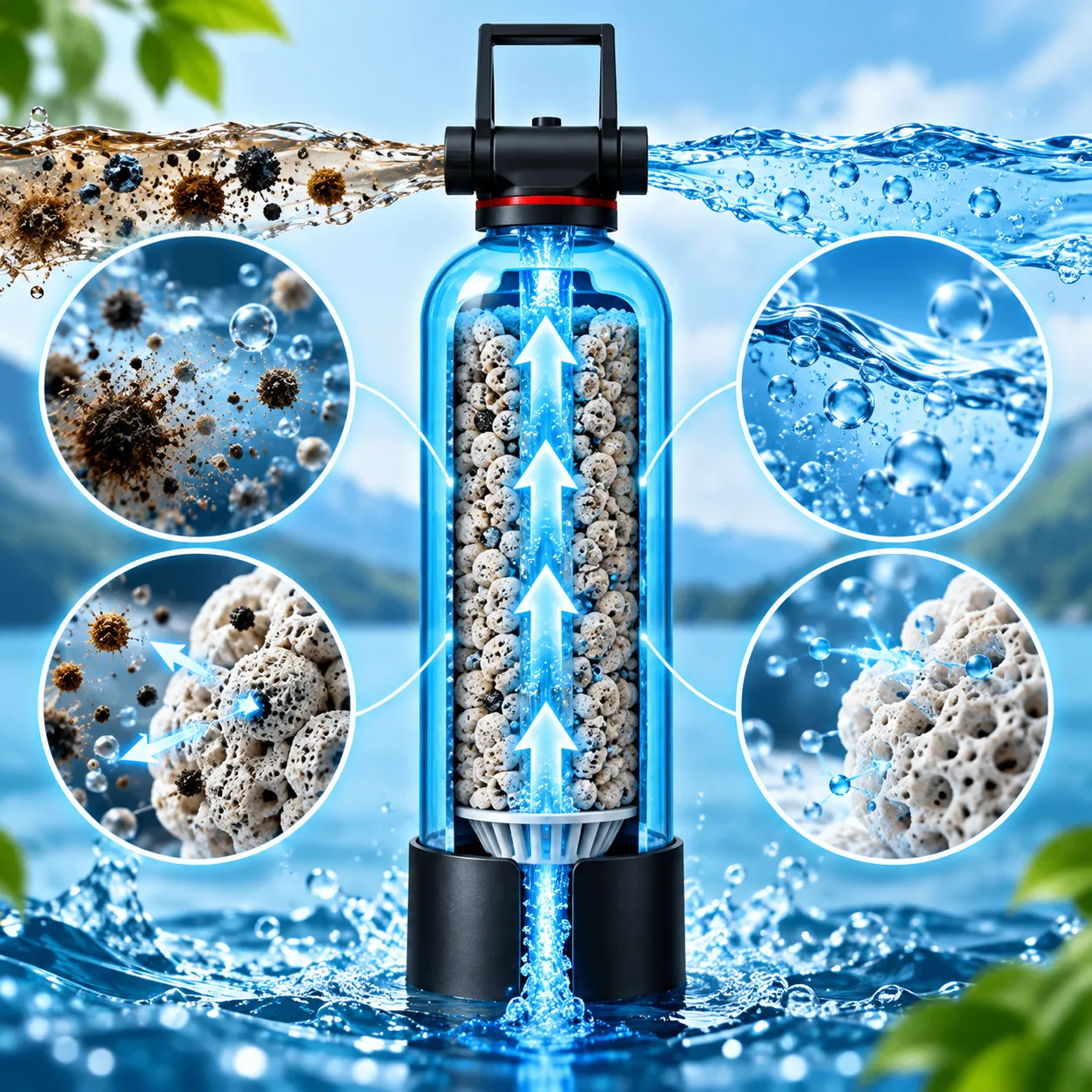
CRYSTOLITE™ combines fine mechanical filtration, surface retention and selective adsorption within a reusable granular bed.
- High Surface Area – The brochure publishes a surface area of approximately 600–620 m²/g, providing extensive contact between water, solids and active mineral surfaces.
- Fine Solids Retention – The granular structure is designed to retain fine suspended particles responsible for turbidity and elevated SDI.
- Dynamic Backwash Cleaning – Bed expansion and particle movement during backwashing release accumulated solids for discharge or recovery.
- pH-Dependent Adsorption – The mineral surface can adsorb selected ammonium and metal ions, but performance depends on pH, contact time and competing water constituents.
Download our latest CRYSTOLITE™ documents
Explore the CRYSTOLITE™
poster library


Frequently
Asked Questions
Learn about CRYSTOLITE™ filtration performance, applications, system design, backwashing and regeneration.
Contact SupportGet a high-performance filtration solution
It all starts with your water and solids analysis.
Send us your flow rate, turbidity, TSS, particle-size distribution, SDI, pH, temperature and target water quality. Our specialists will help determine the correct media quantity, vessel size, service velocity and backwash requirements.